

|
(Click on links below. Whole page needs to load before links work.)
Description |
|
Description of Company |
Rush Street Interactive, Inc. (NYSE: RSI)
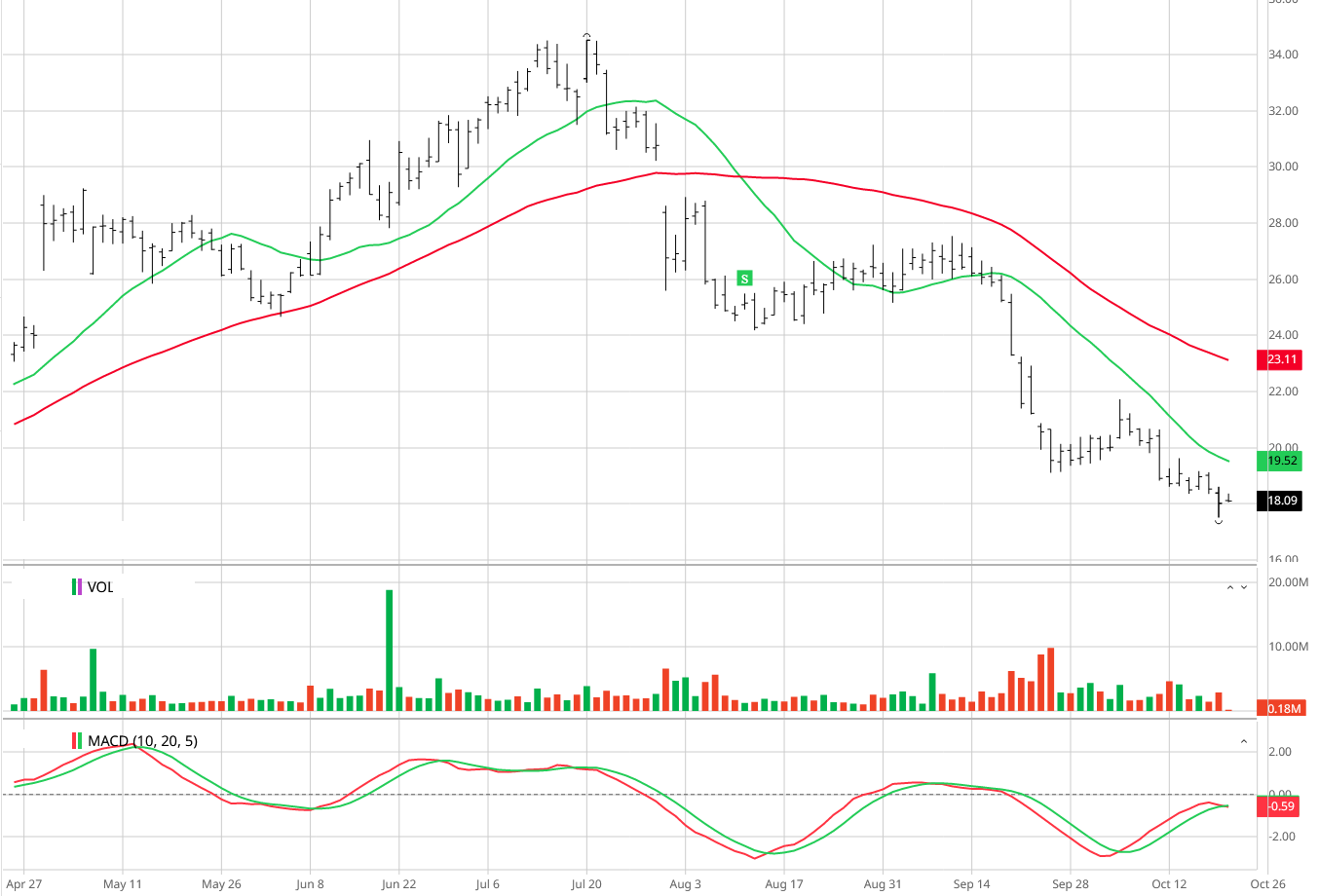
Price: $18.01, down 2.75% at the close on Oct 19, 2026; 52-week range $15.51–$34.53; beta 1.71. Market value is roughly $4.5 billion at today’s price (my estimate, scaled from $5.1 billion at $20.56 on Oct 6).

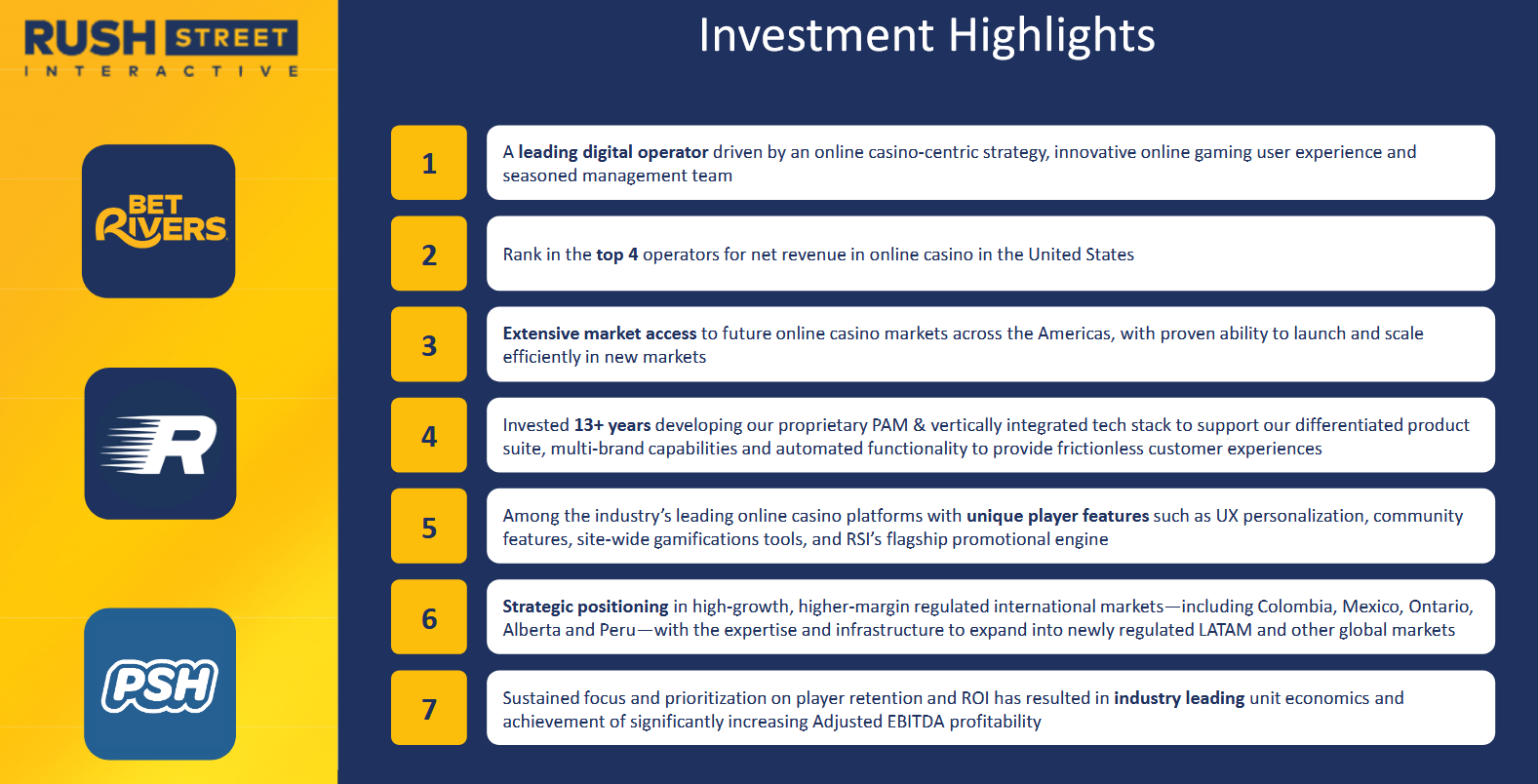
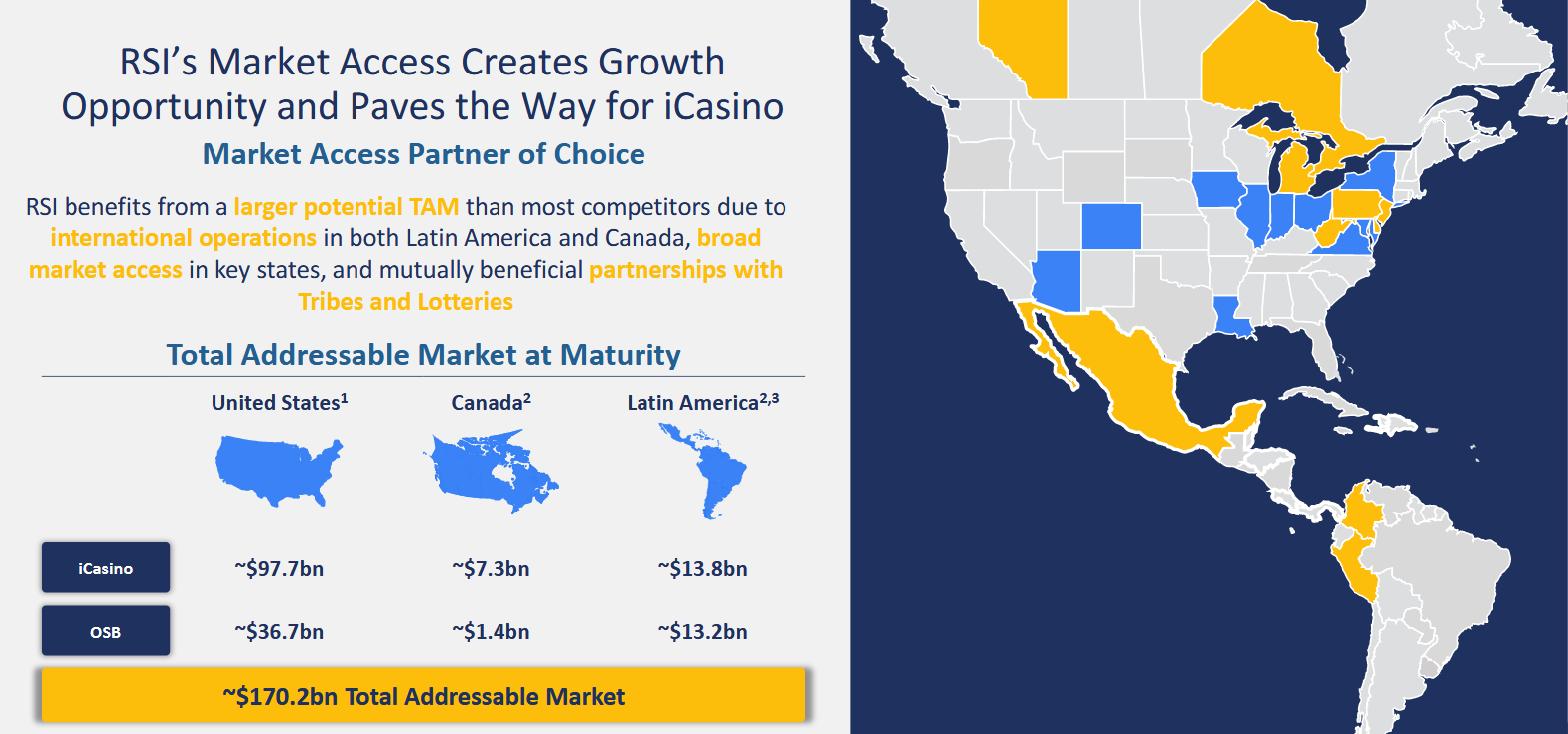
RSI is a Chicago-based online gambling company. It was founded by Neil Bluhm and Greg Carlin and grew as U.S. states legalized online sports betting and casino games. Its main U.S. brand is BetRivers. It operates in the U.S., Canada and Latin America, where Colombia is the largest market.

The business

RSI calls itself "casino-first." Online casino was 72% of revenue last quarter. Online casino players are worth more than sports bettors because they play daily all year. Sports betting depends on the sports calendar and on luck in game outcomes.

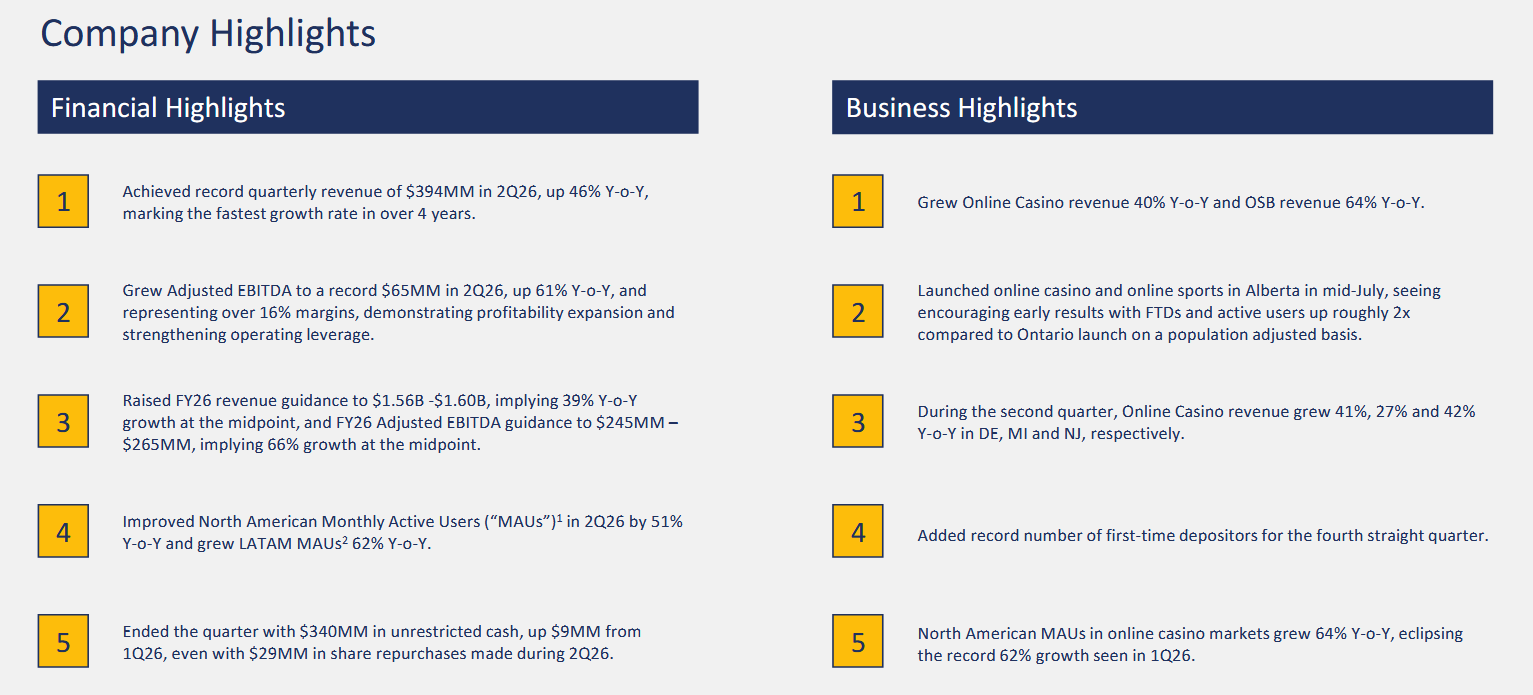
Second-quarter 2026 results, reported July 29, were very strong:
- Revenue was a record $393.8 million, up 46%. Net income was a record $29.3 million. Adjusted EBITDA was $64.6 million, up 61%. Monthly active users were about 949,000, up 58%.
- North America revenue grew 23% and Latin America revenue grew 195%. The World Cup helped sports betting.
- Full-year 2026 guidance was raised to $1.56–$1.6 billion in revenue and $245–$265 million in adjusted EBITDA. This was the second straight quarter guidance went up.
- The balance sheet is clean, with no meaningful debt.

Prospects

**Positives**
- **Alberta, Canada:** RSI launched there July 13. Early sign-ups and daily users ran about double what Ontario showed at the same stage.
- **New U.S. states:** RSI sees possible online casino legalization in New York, Virginia, Indiana and Maryland. Maine has already approved online casino. Any large-state approval would be a major boost, but these are slow, political processes.
- **Steady market-share gains** in North American online casino.

**Risks**
- **Colombia taxes:** Guidance assumes the current 16% tax on gaming revenue stays. Management said it could change depending on government action and constitutional court rulings. Colombia has changed the rules three times in about 18 months.
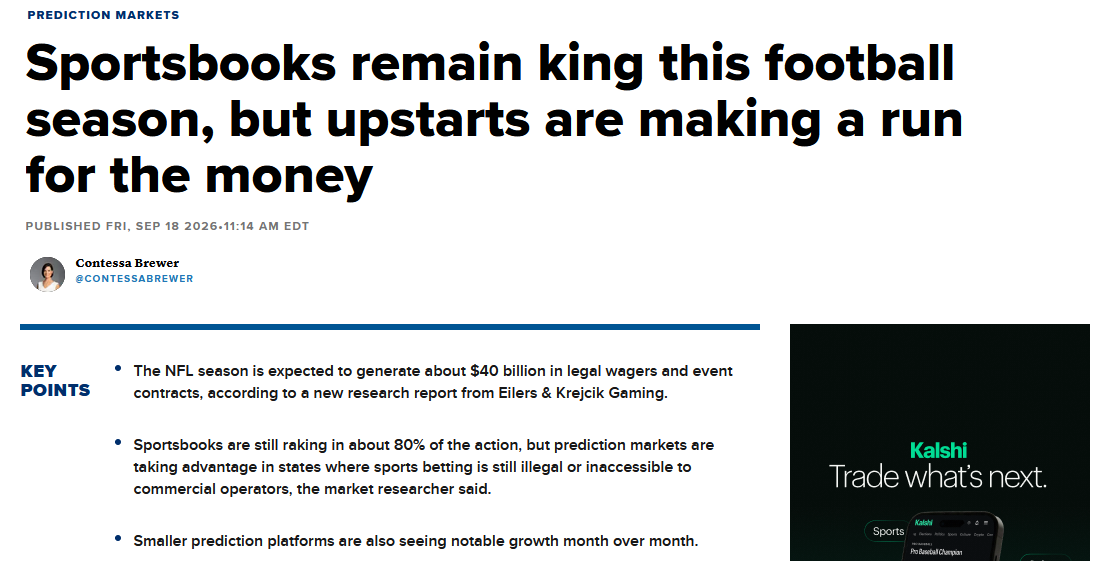
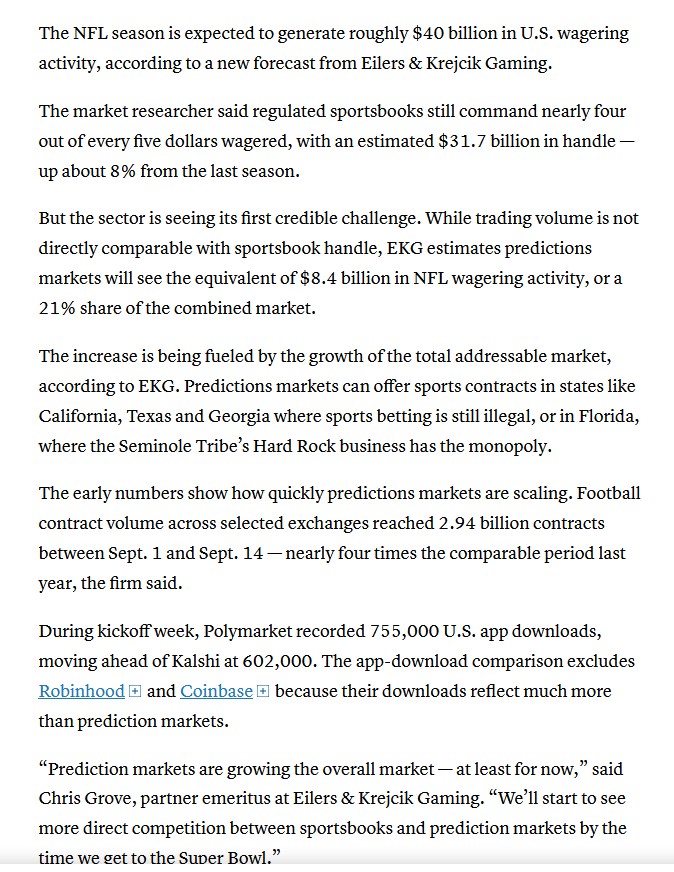
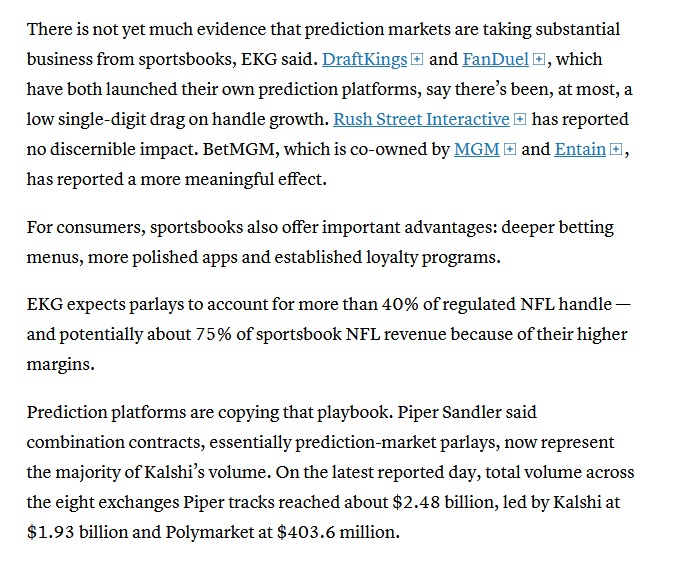
- **Prediction markets:** Investors worry that prediction markets such as Kalshi are pressuring sportsbook valuations. This matters less for RSI than for sports-heavy DraftKings, because RSI is mostly casino. One helpful development: a U.S. appeals court ruled that states can regulate Kalshi's event contracts under their gambling laws.

- **Valuation:** The P/E is near 59 and price-to-book is above 23. Against the company's adjusted EPS guidance of about $0.62, the forward P/E is roughly 29 by my arithmetic. That is reasonable for a company growing about 40%, but expensive if growth slows.

## Recent news

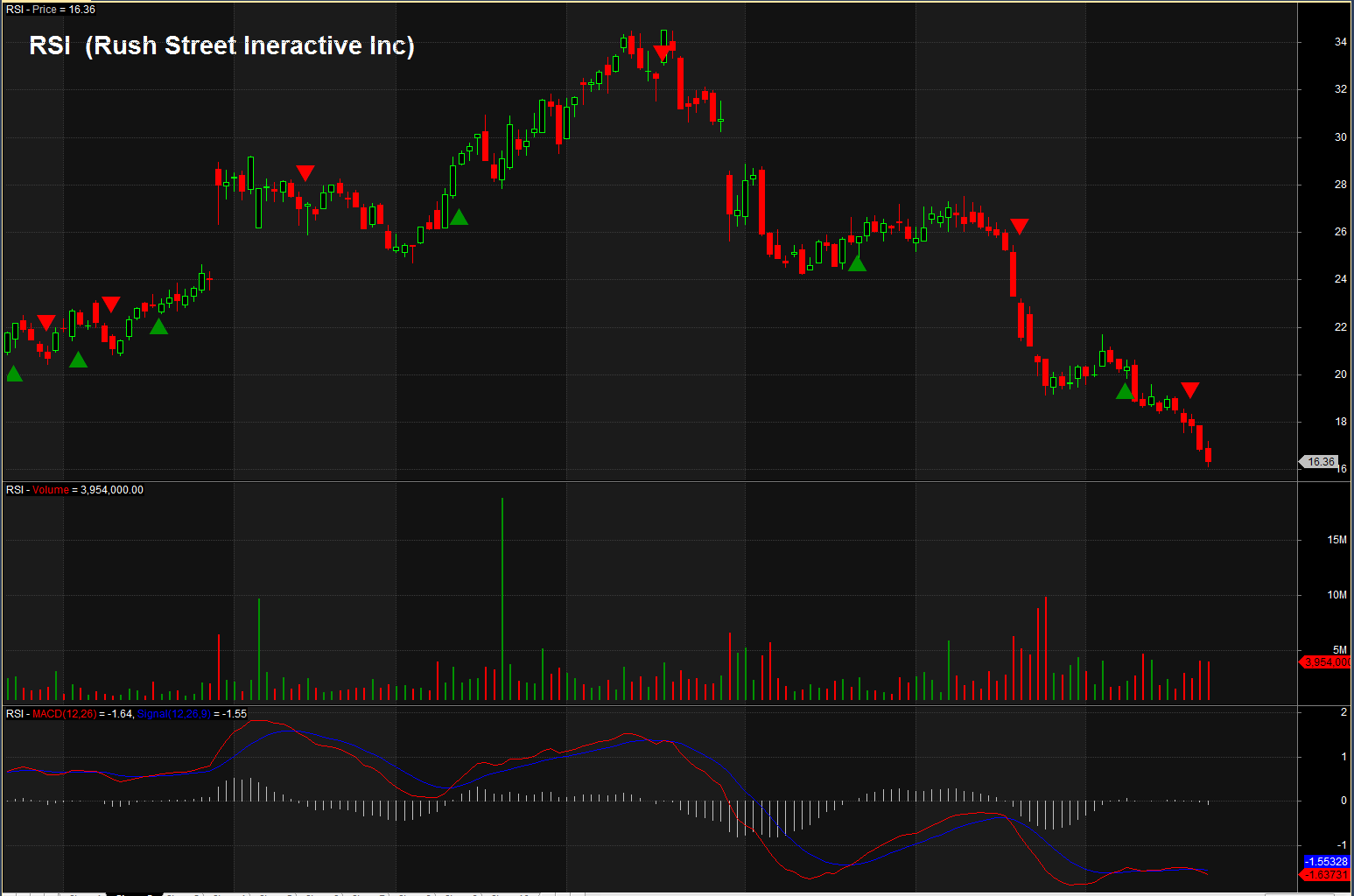
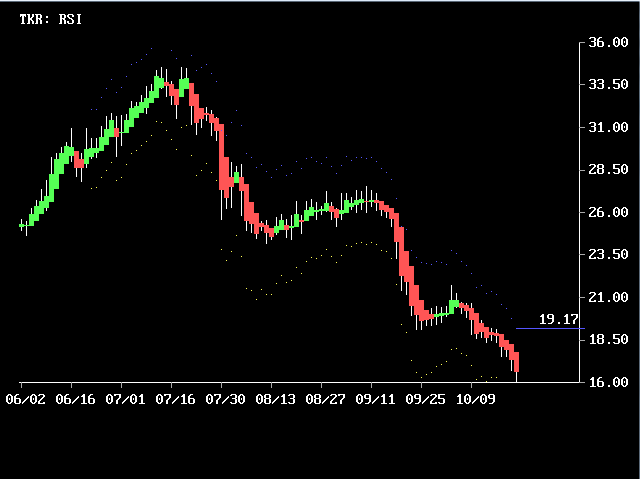
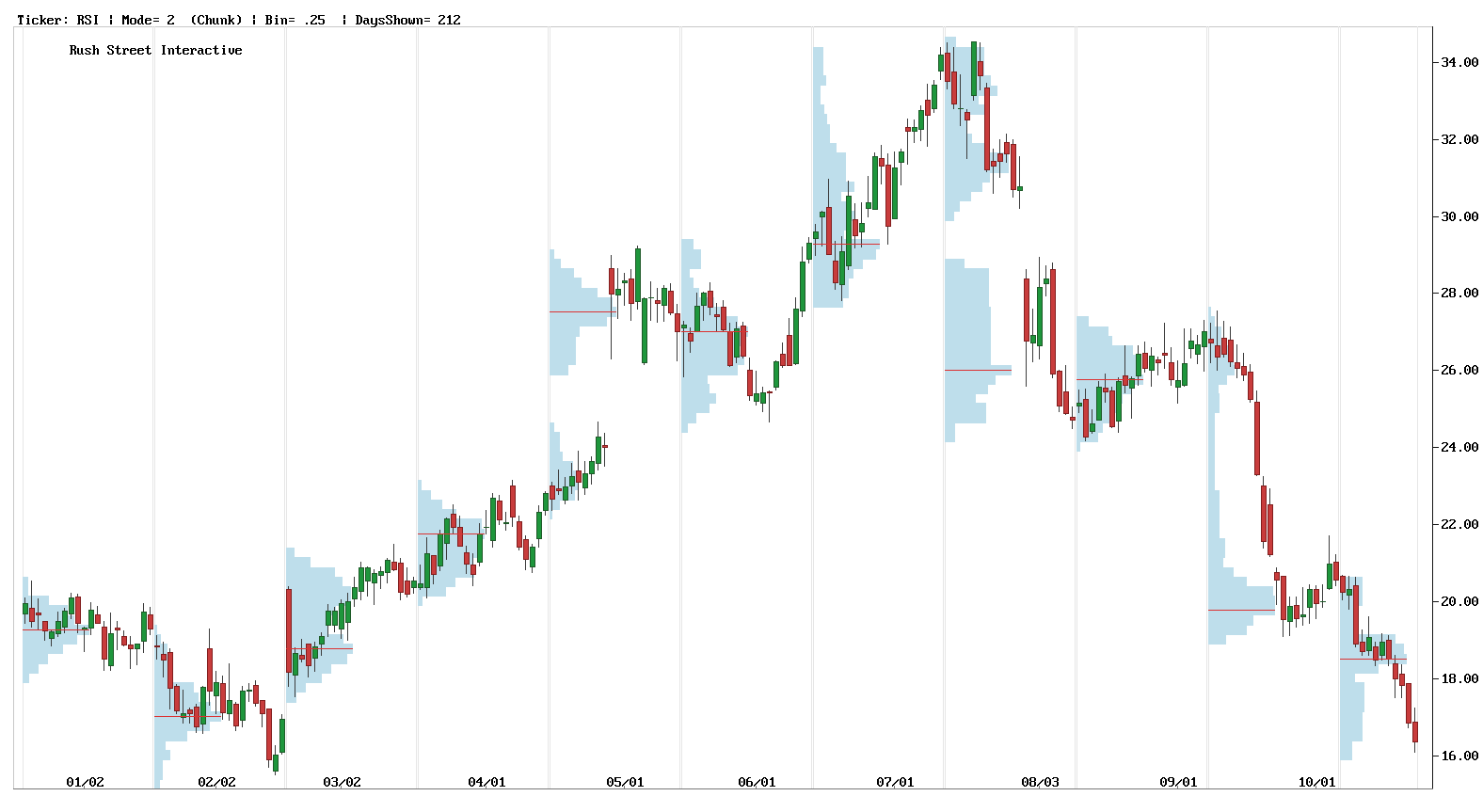
- **Sell-off since July:** The stock fell 15% the day after the strong Q2 report in a "sell the news" reaction. It has kept falling, from about $34.50 to about $18, which is nearly half its value.
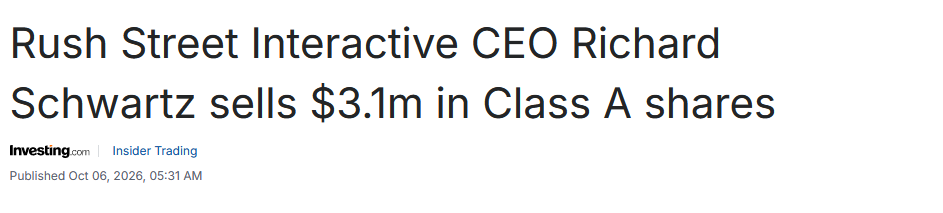
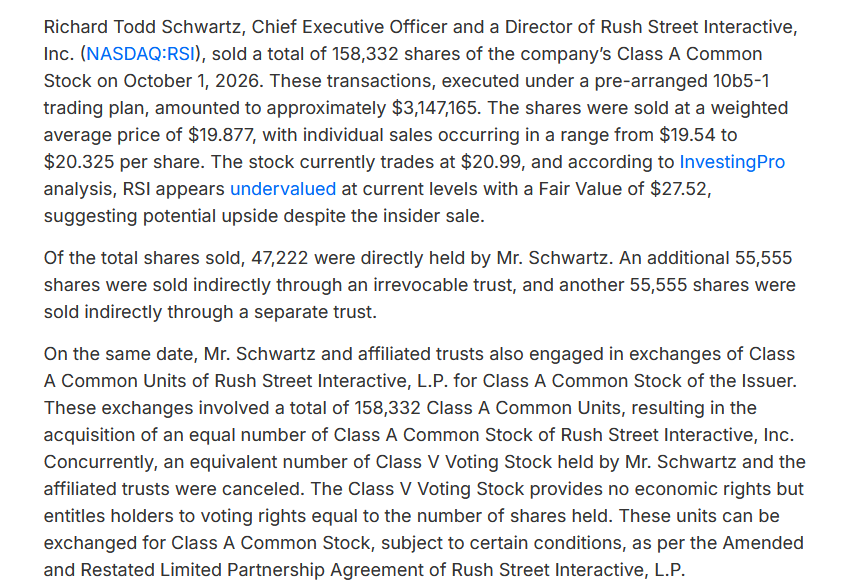
- **Insider selling:** On Sept 3 the CEO sold 158,332 shares at about $25.69 under a pre-planned trading program. In early October, the CFO sold 23,000 shares at $20.31 and the COO also sold. These were pre-scheduled plans, but they still weigh on sentiment.
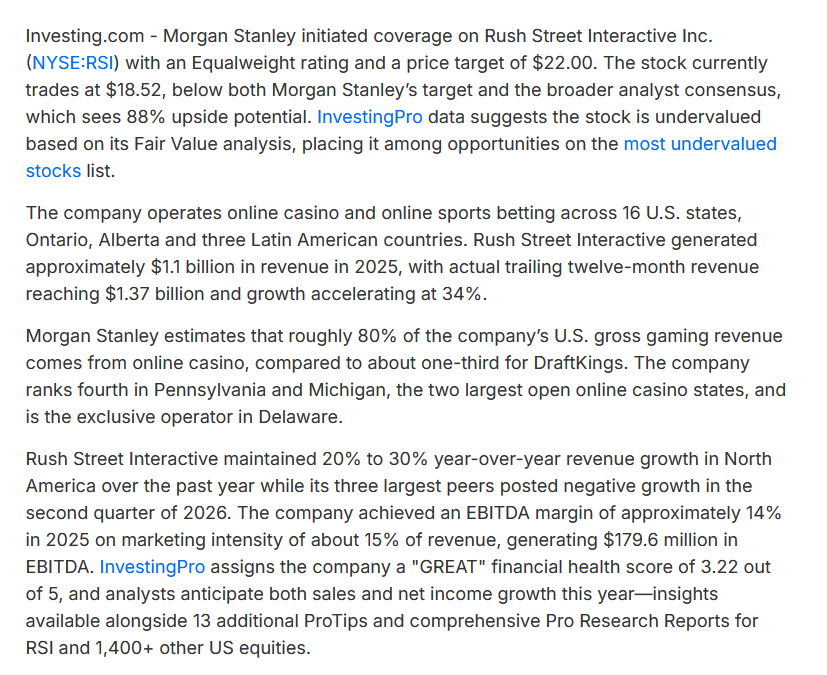
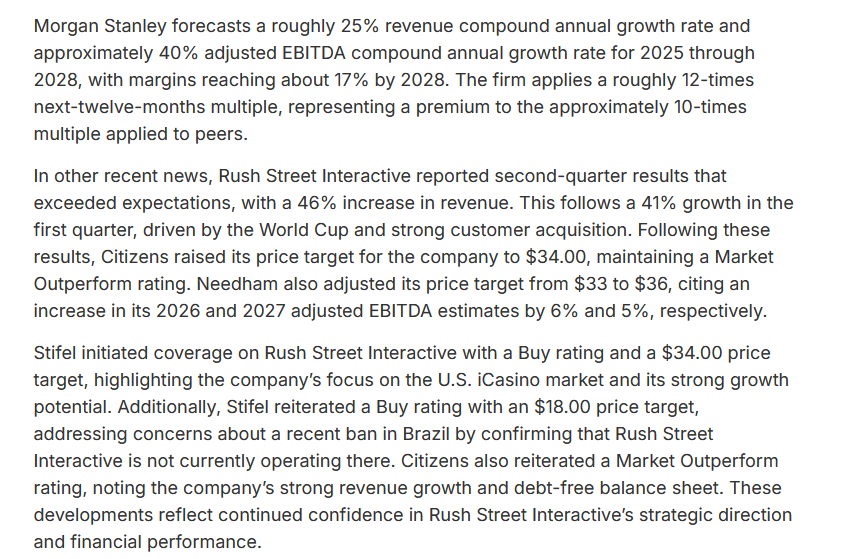
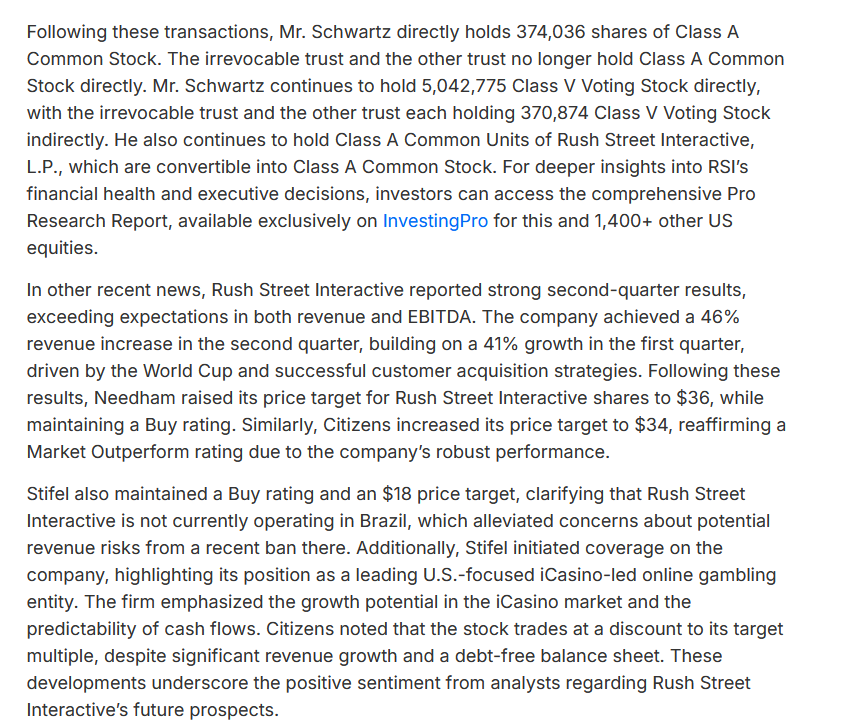
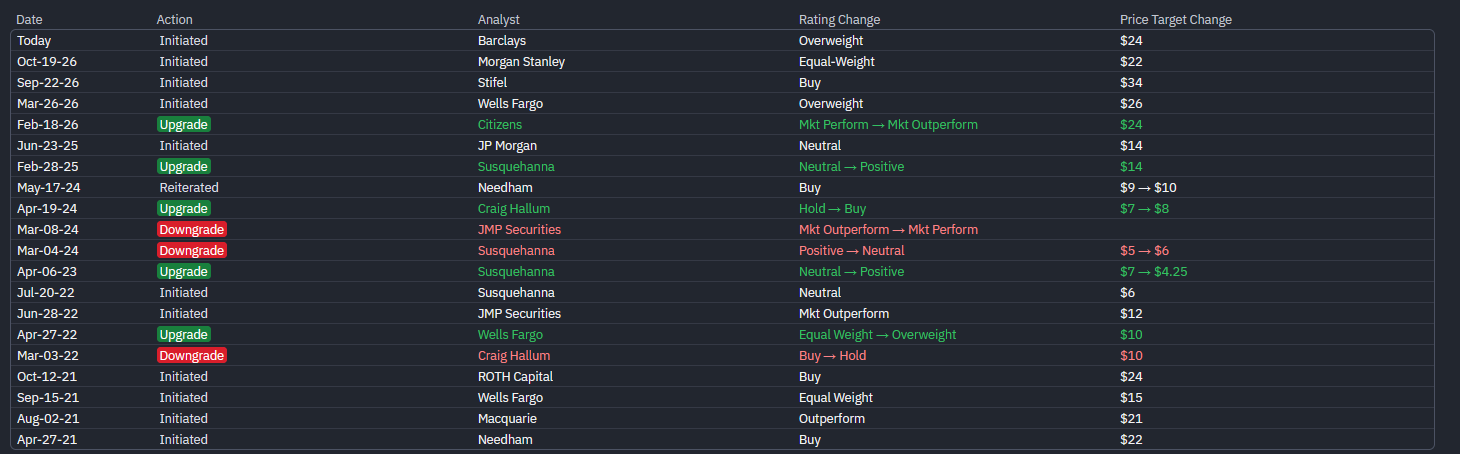
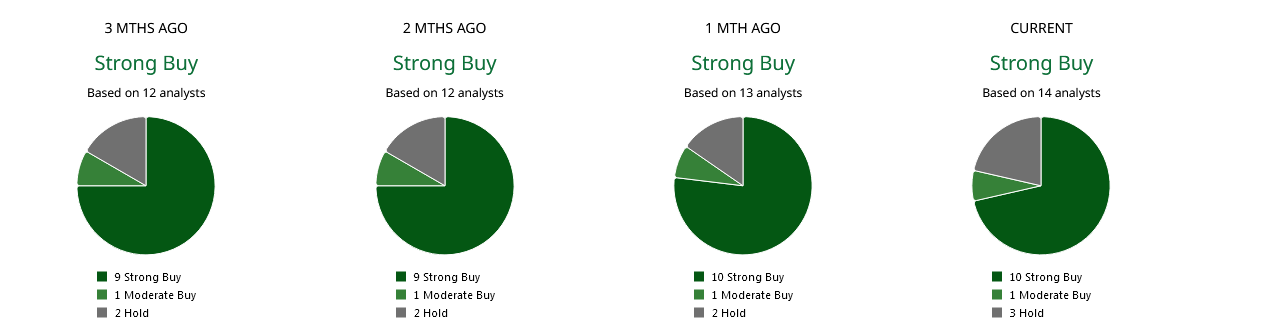
- **Analyst moves:** On Oct 9, Susquehanna cut its target to $27 from $37 because of higher-than-expected marketing spending in the second half. Morgan Stanley started coverage at Equal Weight with a $22 target. Stifel started at Buy with a $34 target. Overall, MarketBeat shows one Strong Buy, ten Buys and three Holds, with an average target of $34.20.
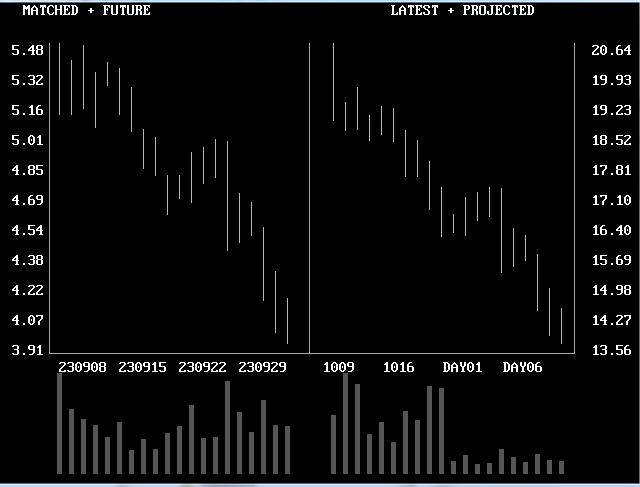
- **Technical picture:** The week of Oct 5–9 the stock fell from a $21.25 intraday high to an $18.88 close, breaking below a $20.20–20.24 congestion band. That band is now resistance.
- **Earnings:** Q3 results come out after the close Wednesday, Oct 28, 2026. That is 8 days away, so it gets a minus on your earnings-proximity factor.

Opinion as an investment

The business is in excellent shape. Revenue is growing 40%+, profits are at records, there is no debt, and the company is beating estimates and raising guidance. The stock is in a clear, steep downtrend anyway. The market is pricing in tax risk, prediction-market fears, insider supply and a high starting valuation.

For a long-term holder, $18 looks like a much more reasonable price for this business than $34 did. For a trend-following method, though, the trend is down and has not turned.

Up or down?

**Near term (before and through earnings): down to sideways is somewhat more likely, but with a high chance of a sharp move either way.** The main reasons are:

- **Q3 is already expected to look weak.** Management guided Q3 revenue flat with Q2 and said Q3 EBITDA would be the lowest quarter of the year because of higher marketing spending. Headlines comparing Q3 to Q2 could look bad even if RSI meets its own plan.
- **The real swing factors are elsewhere.** The stock will likely move on the Q4 and 2027 outlook, Alberta results, and any news from Colombia.
- **Moves can be large.** RSI had 22 daily moves over 5% in the past year.

**6–12 months: modestly up is more likely than down**, provided Colombia stays stable and Q4 shows the expected uptick. Growth at this rate usually pulls the stock back toward analyst targets in the mid-$20s once the selling pressure clears.

- **As a short:** the trend supports it, but the risk is high. Earnings are 8 days out, almost every analyst rates it a Buy, and a good Q4 outlook could squeeze it 15–20% overnight. Don't short it into the report. If one does, a tight bracket above the $20.25 area is essential.

- **As a long:** Wait for the report. Then either a close back above about $20.25, or a successful retest of the $15.50 52-week low, before treating the downtrend as over.
Corporate Website Excerpts |

News Items |
Amibroker |
More Charts
A second version of Zenith Index is shown below for confirmation or lack thereof: The two versions of Zenith Index rating system are such that the second version above favors
shorter term predictions while the first version favors longer-term predictions.
That is because of the nature of the financial parameters they each are using. Management's Discussion: Results of Operations Analysts' Ratings
Overall Market Comparison Recommendation Other Stocks Momentum
Overall Market Comparison Recommendation
Zenith Index
RSI  Rush Street Interactive Inc
------------------------------------------------------------------------------
Parameter (ideal threshold)                           Score         Value
------------------------------------------------------------------------------
Gross Profit Margin > 35%?                          .989206      34.62221
Operating Profit Margin > 10%?                      .764791       7.64791
Net Profit Margin > 5%?                             .587221      2.936105
Return on Assets > 4%?                                    1       5.05807
Return on Equity > 12%?                            .9145795      10.97495
Return on Capital Employed > 10%?                         1      19.35579
Current Ratio > 1.5?                                      1      1.934576
Quick Ratio > 0.8?                                        1      1.934576
Cash Ratio > 0.2?                                         1      1.619335
Debt to Equity Ratio < 1.1?                         .940339      1.169791
Debt to Assets Ratio < 0.4?                        .7419415      .5391261
Interest Coverage Ratio > 3.0?                            1             4
Debt Service Coverage Ratio > 1.5?                        1      31.92054
Asset Turnover Ratio > 0.5?                               1      1.722714
Inventory Turnover Ratio > 5?                             1             5
Receivables Turnover Ratio > 5?                           1      71.53213
Payables Turnover Ratio > 7?                              1      17.83489
P/E Ratio < 15?                                    .2670465         56.17
Price / Book < 1.0?                               96721E-02          12.2
Price / Sales < 1.0?                               .2906977          3.44
Price / CashFlow < 5?                              .1229105         40.68
Earnings Yield > 5%?                                .356062       1.78031
Dividend Yield > 5%?                                      0             0
Dividend Payout > 30%?                                    0             0
Operating Cash Flow Ratio > 0.5?                          1      .7847095
Free Cash Flow to Firm > 5% of Revenue?                   1      11.95721
Free Cash Flow to Equity > 10% of Revenue?                1      11.71762
Sales Growth > 5%?                                        1      22.76257
Earnings Growth > 5%?                                     1      1294.807
Market Capitalization > $5B?                       .3905607      1.952803
------------------------------------------------------------------------------

Zenith Index for Rush Street Interactive Inc (RSI) = .748244

SCORING: each metric's Z-score = 1.00 exactly at its ideal threshold above;
an average ZIndex greater than 1.00 leans BUY, less than 1.00 leans SELL.
This run's ZIndex => SELL candidate
    Zenith Index for Rush Street Interactive Inc on 10:55 ET
    ------------------------------------------------------------------------
    Metric                              Score     Value
Analysts Rating ?                           1     Strong Buy
P/E Ratio < 26 ?                            0     56.17
Price/Sales < 3 ?                           0     3.44
Market Capitaliztion > $33 billion ?        0     3791806000
Sales > $20 billion ?                       0     1134000000
Price/Book Value < 2.9 ?                    0     12.2
Avg. Day Trading Volume > 600 million ?     0     2795333
Price/Cash Flow < 30 ?                      0     40.68
Implied Vol'ty / Historic Vol'ty < 1 ?      0     1.59
Dividend Yield > 1% ?                       0     0
EPS Growth Rate (YoY) % Estimate > 6% ?     1     66.67
Option Put/Call Ratio < 0.7 ?               1     .32
Beta < 1 ?                                  0     1.71
Shares Outstanding > 100 Million ?          1     231773000
Depr'n & Amort'zn (EBITDA/EBIT) < 100% ?    0     1.222
Absurd val'ns: PE, PS, PCSH, D/E Exist ?    0     56.17,  40.68,
Debt to Equity < 1.5 ?                      1     1.1697914264061
Return on Equity > 12% ?                    0     .10975649939042

      Zenith Index (scale of 0 to 100) =   29     SELL

      (Below 50 is sell, Above 50 is buy candidate)
Trends in Key Metrics
Monthly Active Users
MAUs is the number of unique users per month who have placed at least one real-money bet across one or more of our online casino (including online poker) or online sports betting offerings. For periods longer than one month, we average the MAUs for the months in the relevant period. We exclude users who have made a deposit but have not yet placed a real-money bet on at least one of our online offerings. We also exclude users who have placed a real-money bet but only with promotional incentives.
MAUs is a key indicator of the scale of our user base and awareness of our brands. We believe that year-over-year MAUs is also generally indicative of the long-term revenue growth potential of our business, although MAUs in individual periods may be less indicative of our longer-term expectations. We expect the number of MAUs to grow as we attract, retain and re-engage users in new and existing jurisdictions and expand our offerings to appeal to a wider audience.
The year-over-year increase in MAUs in the United States and Canada for 2025 compared to 2024, as well as for 2024 compared to 2023, was mainly due to our continued growth and strong customer retention rates in existing markets, and our continued achievement of positive response from our strategic advertising and marketing efforts. Additionally, the full year of operations in Delaware in 2024 significantly contributed to the year-over-year increase in MAUs for 2024 compared to 2023.
The chart below presents our average MAUs in Latin America (including Mexico) for the years ended December 31, 2025, 2024 and 2023:
The year-over-year increase in MAUs in Latin America for 2025 compared to 2024, as well as for 2024 compared to 2023, was mainly due to our continued growth, strong customer retention rates, and our continued achievement of positive response from our strategic advertising and marketing efforts. In 2024, we also experienced an uplift in MAUs driven by
the Copa América soccer tournament in mid-2024 and our launch in Peru during the third quarter of 2024. Additionally, the full year of operations in Peru in 2025 contributed to the year-over-year increase in MAUs for 2025 compared to 2024.
Average Revenue Per Monthly Active User
ARPMAU for an applicable period is monthly revenue divided by average MAUs. This key metric represents our ability to drive usage and monetization of our online offerings.
ARPMAU remained generally flat in the United States and Canada for 2025 compared to 2024 while significantly increasing MAUs in the same period. This trend reflects the addition of new players, who typically generate lower ARPMAU compared to more established players. The year-over-year increase for 2024 compared to 2023 was mainly due to MAU growth in online casino markets, including Delaware, outpacing that of sports betting only markets, the impact of our strategic advertising and marketing efforts and our focus on retaining quality players.
The year-over-year decrease in ARPMAU in Latin America for 2025 compared to 2024 was mainly driven by the negative impact of our additional player bonusing as a result of the value-added tax imposed on customer deposits in Colombia, which became effective during the year ended December 31, 2025. We generally maintained ARPMAU in Latin America at a roughly consistent level for 2024 compared to 2023, while significantly increasing MAUs in the same period. The Company experienced a significant increase in sports betting-only customers, during the 2024 Copa América soccer tournament, who generally generate less revenue per customer than customers who use online casino.
Non-GAAP Information
This MD&A includes Adjusted EBITDA, which is a non-GAAP performance measure that we use to supplement our results presented in accordance with GAAP. We believe Adjusted EBITDA provides useful information to investors regarding our results of operations and operating performance, as it is similar to measures reported by our public competitors and is regularly used by securities analysts, institutional investors and other interested parties in analyzing operating performance and prospects. Non-GAAP financial measures are not intended to be considered in isolation or as a substitute for any GAAP financial measures and, as calculated, may not be comparable to other similarly titled measures of performance of other companies in other industries or within the same industry.
We define Adjusted EBITDA as net income (loss) before interest, income taxes, depreciation and amortization, share-based compensation, adjustments for certain one-time or non-recurring items and other adjustments that are detailed in the reconciliation table below. Adjusted EBITDA excludes certain expenses that are required in accordance with GAAP because certain expenses are either non-cash or are not related to our underlying business performance.
We include Adjusted EBITDA because management uses it to evaluate our core operating performance and trends and to make strategic decisions regarding the distribution of capital and new investments. Management believes that Adjusted EBITDA provides investors with useful information on our past financial and operating performance, enables comparison of financial results from period-to-period where certain items may vary independent of business performance, and allows for greater transparency with respect to metrics used by our management in operating our business. Management also believes that Adjusted EBITDA is useful in evaluating our operating performance compared to that of other companies in our industry, as this metric generally eliminates the effects of certain items that may vary from company to company for reasons unrelated to overall operating performance.
Key Factors Affecting Our Results
Our financial position and results of operations depend, to a significant extent, on the following factors:
Industry Opportunity and Competitive Landscape
We operate within the global gaming and entertainment industry, which is comprised of diverse products and offerings that compete for consumers’ time and disposable income. As we prepare to enter new jurisdictions, we expect to face significant competition from other existing industry players, some of which may have more experience in online casino, and online and/or retail sports betting or in one or more of the markets in which we operate or intend to operate, and have access to more resources. We believe that our proprietary online gaming platform, our experience operating in domestic and foreign jurisdictions, our brand and marketing strategies, which appeal to both male and female customers, and our many unique product offerings and bonusing features will enable us to compete with such existing industry players.
Our performance may vary from one jurisdiction to the next, resulting from the level of competition in each jurisdiction.
Legalization, Regulation and Taxation
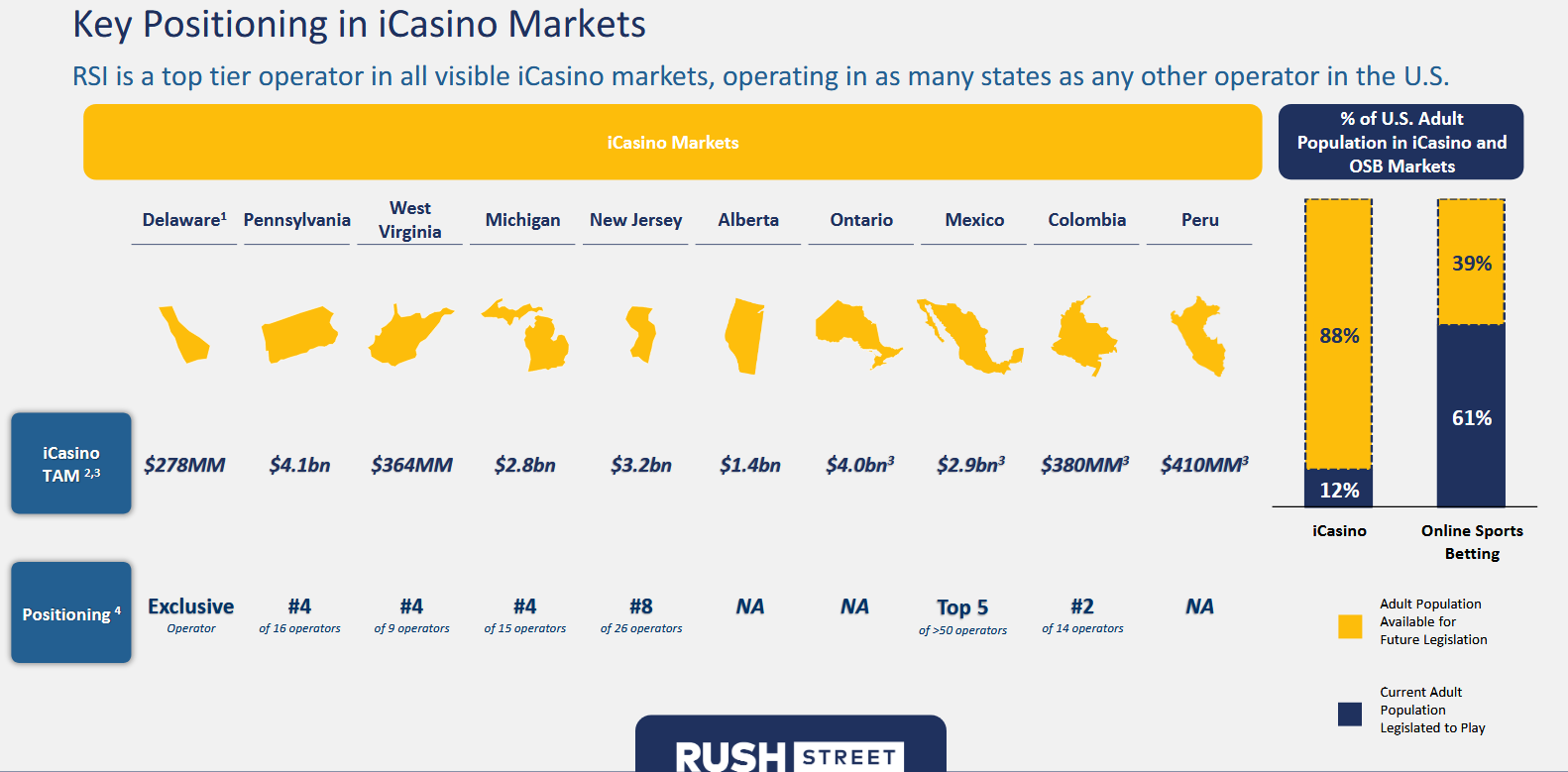
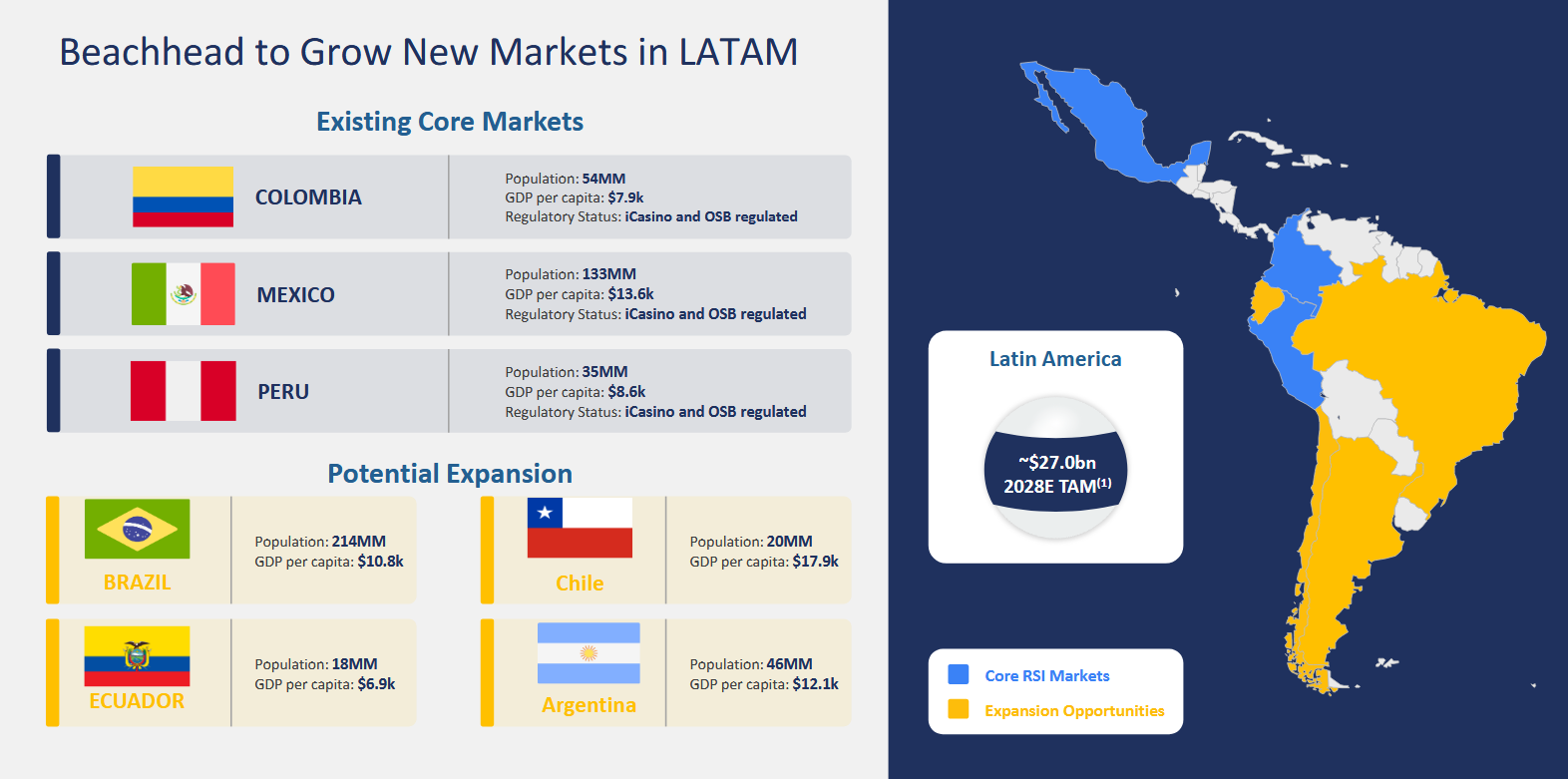
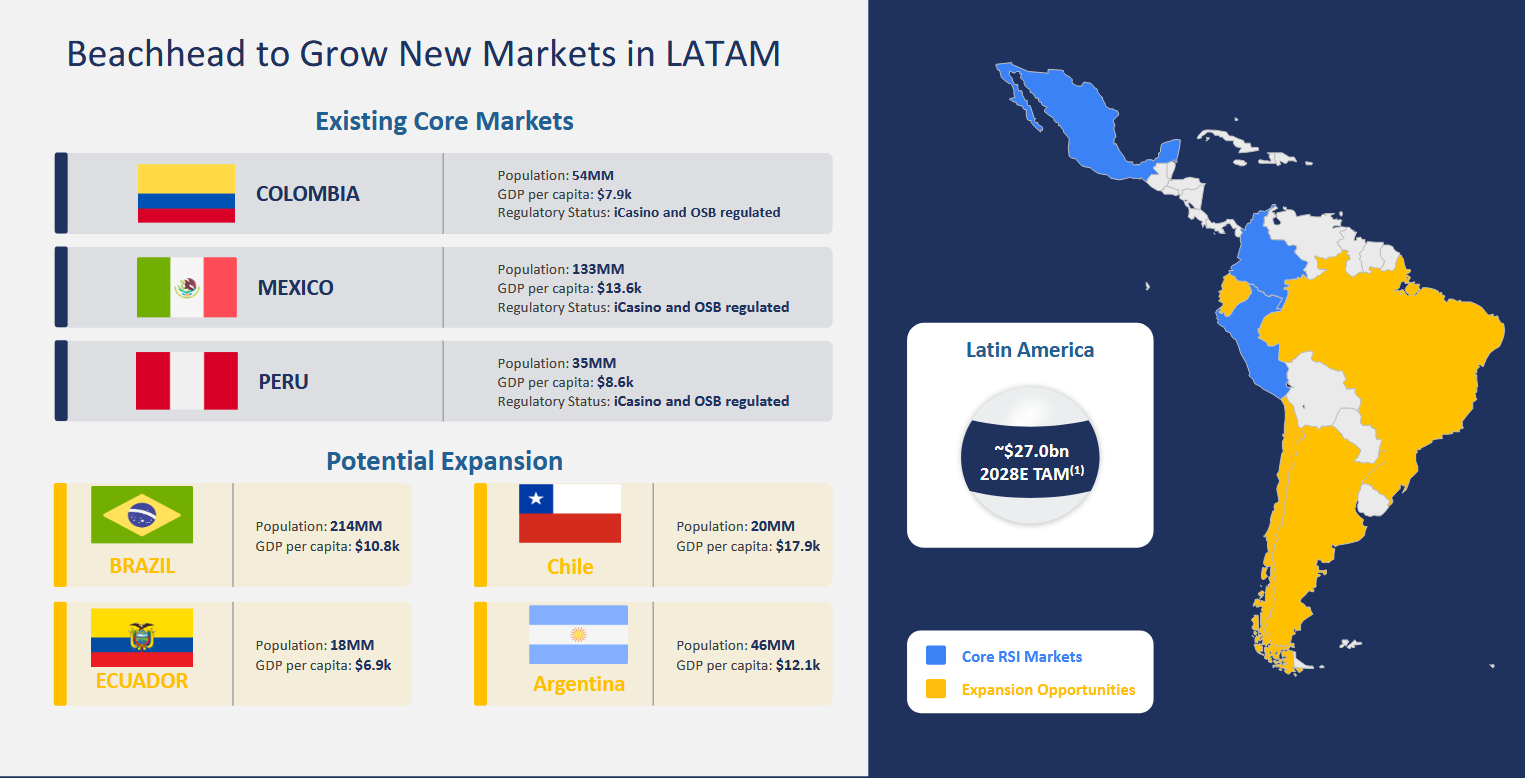
Our financial growth prospects largely depend on our ability to make our online casino and sports betting offerings available in more jurisdictions, with particular emphasis on the United States and Latin America, a trend that we believe is still in its early stage. Online casino may expand further due to many factors, including that many U.S. states and foreign jurisdictions are seeking ways to increase revenues. In the United States, online sports betting’s prospects were made possible after the U.S. Supreme Court struck down PASPA in May 2018. Our strategy is to enter new jurisdictions that we believe are financially prudent for us to enter. Online casino is currently authorized only in nine U.S. states: Connecticut, Delaware, Maine (although the market is not yet operating), Michigan, New Jersey, Pennsylvania, West Virginia, Rhode Island and Nevada (although regulators have not authorized online casino outside of physical casinos in Nevada). As of the date hereof, 39 states and the District of Columbia have authorized sports betting. Of those 40 jurisdictions, 32 states have authorized statewide online sports betting while 8 remain authorized for retail-only at casinos or retail locations. In Latin America, several countries, including Argentina, Ecuador, Brazil and Peru, are either exploring legalizing, expanding or regulating online casino and/or online sports betting, or have recently legalized these activities.
The process of securing the necessary licenses or partnerships to operate in a given jurisdiction may take longer or be more difficult than we anticipate. In addition, legislative or regulatory restrictions and gaming taxes may make it less attractive or more difficult for us to do business in a particular jurisdiction. Further, certain jurisdictions require us to have a relationship with a bricks-and-mortar casino or other land-based partner for online casino and/or sports betting access, which tends to increase our costs of revenue. Jurisdictions that have established state or government-run monopolies may limit opportunities for private operators such as us.
States, foreign jurisdictions and some local governments impose tax rates on online casino and sports betting, which may vary substantially between jurisdictions and may change from time to time, usually because of factors outside our control. We are also subject to a U.S. federal excise tax of 0.25% on the amount of each sports bet placed in the United
States. We believe the jurisdictions that will create the most compelling levels of profitability for us are jurisdictions with both online casino and sports betting at favorable tax rates.
Ability to Acquire, Retain and Monetize Customers
Our ability to effectively market is critical to operational success. Using experience, dynamic learnings and analytics, we leverage marketing to acquire, convert, retain and/or re-engage customers. We use a variety of earned media and paid marketing channels, in combination with compelling offers, brand ambassadors, proprietary content, and unique game and site features, to attract and engage customers. Furthermore, we continuously optimize our marketing spend using data collected from our operations. Our marketing spend is based on a return-on-investment model that considers a variety of factors, including the product offerings in the jurisdiction, local advertising rules, the performance of different marketing channels, predicted lifetime value, marginal costs and expenses and behavior of customers across various product offerings.
With respect to paid marketing, we use a broad array of advertising channels, including television, radio, out-of-home (i.e., billboards, stadium signage), social media platforms, sponsorships, affiliates and paid search, and other digital channels. We also use other forms of marketing and outreach, such as our social media channels, first-party websites, media interviews and other media spots and organic searches. These efforts are concentrated within the specific jurisdictions where we operate or intend to operate to the extent possible. We believe there is significant benefit to having a flexible approach to advertising spending as we can quickly redirect our advertising spending based on dynamic testing of which advertising methods and channels are working and which ones are not. These investments and personalized promotions are intended to increase consumer awareness and drive engagement.
Managing Wagering Risk
The online casino and retail and online sports betting businesses are characterized by an element of chance. Accordingly, we employ theoretical win rates to estimate what a certain type of online casino wager or retail or online sports bet, on average, will win or lose in the long run. Revenue is impacted by variations in the hold percentage (the ratio of our winnings to total amount bet) of our offerings. We use the hold percentage as an indicator of an online casino game or retail or online sports bet’s performance against its expected outcome. Although each bet generally performs within a defined statistical range of outcomes in the long run, actual outcomes may vary for any given period, particularly in the short term. The element of chance may affect win rates (hold percentages); these win rates, particularly for retail and online sports betting, may also be affected in the short term by factors that are largely beyond our control, such as unanticipated event outcomes, a customer’s skill, experience and behavior, the mix of games played or bets placed, the financial resources of customers, the volume of bets placed and the amount of time spent betting. For online casino games, a random number generator outcome or game could malfunction and award errant prizes. For sports betting, our platform could erroneously posts odds or otherwise be misprogrammed to pay out odds that are highly favorable to bettors, and bettors place bets before the odds are corrected. Additionally, odds compilers and risk managers are capable of human error, so even if our betting products are subject to a capped payout, significant volatility can occur. As a result of the variability in these factors, the actual win rates on our online casino games and retail and online sports bets may differ from the theoretical win rates we have estimated and could result in the winnings of our customers exceeding those anticipated. The variability of win rates (hold rates) also has the potential to adversely affect our business, financial condition, results of operations, prospects and cash flows.
Mix of Revenue Based on Time Period in Markets
Our profitability generally depends on how long we have been operating in each jurisdiction. Usually, but not always, our profitability levels will increase in a jurisdiction as we have operated there for longer.
Mix of Revenue From Our Different Operating Models
Because we operate using two different operating models, each with its own unique range of profitability, the relative proportion of revenue that is derived from each operating model in a given time period could impact our overall level of profitability.
Player Liquidity and Volume for Online Poker
The success, and ultimately the profitability, of online poker offering is generally dependent on high levels of player liquidity and volume of game play or tournament participation. In most cases, our profitability levels from our online poker offering will increase as more players participate and the aggregate amount of wagers increases.
Key Components of Revenue and Expenses
We currently offer real-money online casino, online sports betting and/or retail sports betting in 16 U.S. states, Colombia, Ontario, Canada, Mexico and Peru. We also provide social gaming, where users can earn or purchase (where permitted) virtual credits to enjoy free-to-play games.
Our revenue is predominantly generated from our U.S. and Canada operations, with the remaining revenue being generated from our Latin America (including Mexico) operations. See Note 3 to our consolidated financial statements, included elsewhere in this
Annual Report. We generate revenue primarily through the following offerings:
Online Casino
Online casino offerings typically include the full suite of games available in bricks-and-mortar casinos, such as table games (i.e., blackjack and roulette), slot machines and poker games. For these offerings (other than online poker), similar to bricks-and-mortar casinos, we generate revenue through hold, or gross winnings, as customers play against the house. For our poker game offerings, like land-based card rooms that are typically incorporated in land-based casinos, we are generally not exposed to the risks of game play or the outcome of the game as players are not playing against the house but are instead playing against each other on a peer-to-peer basis. We generate revenue through rake, or a small commission taken from the total wagers placed on the hand, which is generally subject to a cap, and through tournament entry fees. Like bricks-and-mortar casinos, there is volatility with online casino, but as the number of bets placed increases, the revenue retained from bets placed becomes easier to predict. Our experience has been that online casino revenue is less volatile than sports betting revenue.
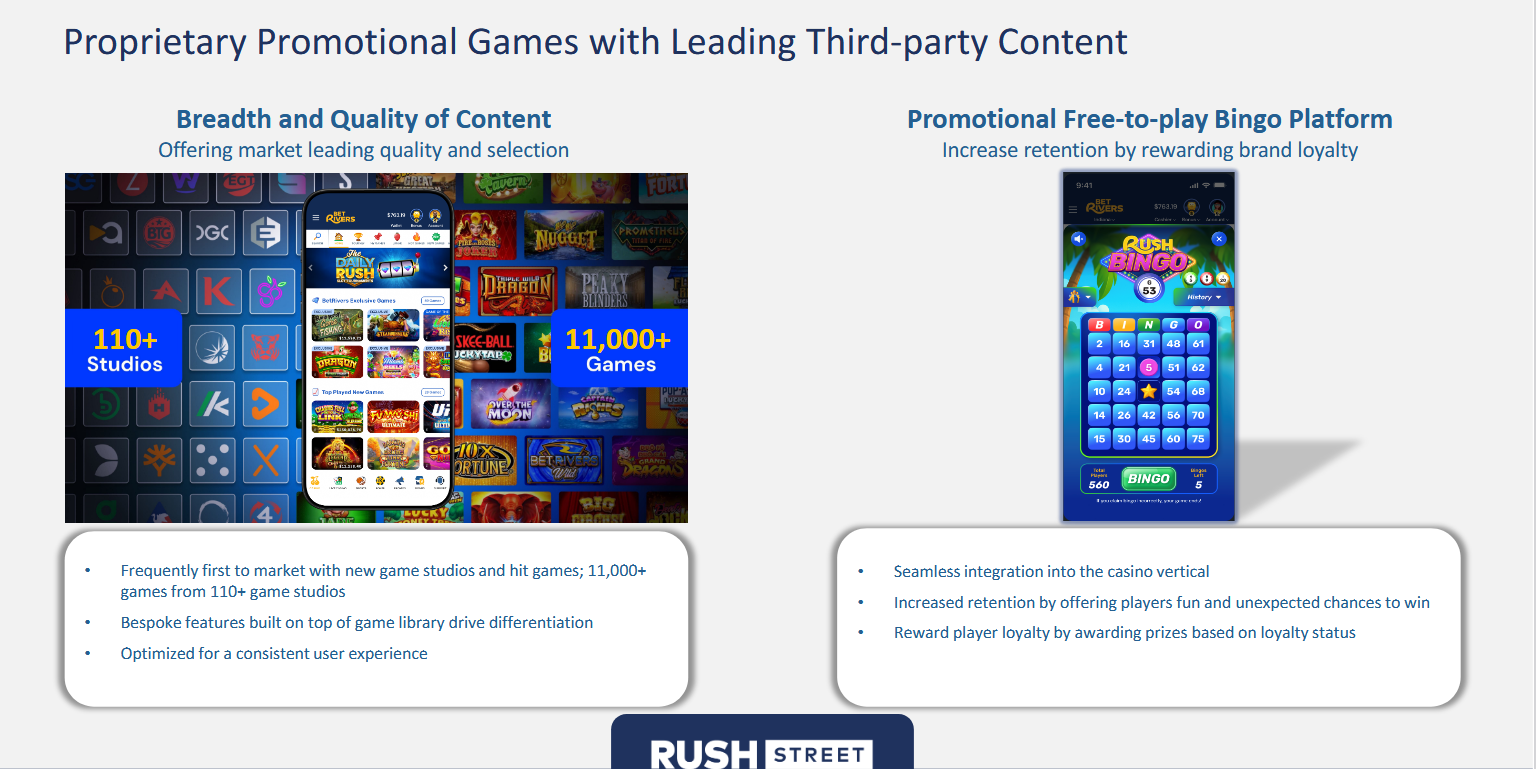
Our online casino offering consists of a combination of licensed content from leading industry suppliers, customized third-party games, our proprietary online poker platform and a small number of proprietary games that were developed exclusively for us. Third-party content is usually subject to standard revenue-sharing agreements specific to each supplier, where the supplier generally receives a percentage of the net gaming revenue generated from its casino games played on our platform. In exchange, we receive a limited license to offer the games on our platform to customers in permitted jurisdictions. We generally pay much lower fees on revenue generated through our proprietary casino games such as our multi-bet blackjack (with side bets: 21+3, Lucky Ladies, Lucky Lucky), and single-deck blackjack, which primarily relate to hosting/remote gaming server fees and certain intellectual property license fees.
With respect to online poker, player liquidity, or the number or volume of players with an operator, is critical to the success of the game, with a greater number of players supporting a wider range and greater volume of games and larger tournaments, thereby increasing the quality of the offering to the consumer. Our online poker offerings include a comprehensive suite of game formats, including cash games, sit & go tournaments, and multi-table tournaments, catering to players of all skill levels. Players play against each other in either ring games (i.e., games for cash on a hand-by-hand basis) or in tournaments (i.e., players play against each other for tournament chips with prize money distributed to the last remaining competitors) or variations thereof.
Online casino revenue (other than from online poker) is generated based on total customer bets less amounts paid to customers for winning bets, less incentives awarded to customers, plus or minus the change in the progressive jackpot reserve. Online casino revenue from online poker is recognized as rake (i.e., percentage of a game’s wagers earned by the Company for satisfying the performance obligation) less any value given back to players, which could be in the form of cash, tournament tickets or other form of bonuses.
Online Sports Betting
Online sports betting involves a user placing a bet on the outcome of a sporting event, a sports-related activity or a series of the same, with the chance to win a pre-determined amount, often referred to as fixed odds. Online sports betting revenue is generated by setting odds such that there is a built-in theoretical margin in each sports bet offered to customers. While sporting event outcomes may result in revenue volatility, we believe that we can achieve a positive long-term betting win margin. In addition to traditional fixed-odds betting, we also offer other fixed-odd sports betting products including in-
game betting and multi-sport and same-game parlay betting. We have also incorporated live streaming of certain sporting events into our online sports betting offering. Integrated into our online sports betting platform is a third-party risk and trading platform currently provided by certain subsidiaries of Kambi Group plc.
Online sports revenue is generated based on total customer bets less amounts paid to customers for winning bets, less incentives awarded to customers, plus or minus the change in unsettled sports bets.
Retail Sports Betting
We provide retail sports betting services to certain land-based partners in exchange for a monthly commission that is calculated based on the land-based retail sportsbook revenue. Services generally include ongoing management and oversight of the retail sportsbook (i.e., within a bricks-and-mortar location), technical support for such partner’s customers, risk management, advertising and promotion, and support for third-party sports betting equipment.
In addition, certain relationships with our partners provide us the ability to operate the retail sportsbook at the land-based partner’s facility. In this scenario, revenue is generated based on total customer bets less amounts paid to customers for winning bets, less other incentives awarded to customers, plus or minus the change in unsettled retail sports bets.
Social Gaming
We provide social gaming where users can earn or purchase (where permitted) virtual credits to enjoy free-to-play games. Users who exhaust their credits can either purchase additional virtual credits from the virtual cashier, if permitted, or wait until their virtual credits are replenished for free. Virtual credits have no monetary value and can only be used within our social gaming platform.
Our social gaming business has three main goals: build online databases in key markets ahead of and post-legalization and regulation; generate revenues; and increase engagement and visitation to our bricks-and-mortar partner properties. Our social gaming products are a marketing tool that keeps the applicable brands present in the minds of our users and engages with users through another channel while providing the entertainment value that users seek. We also leverage our social gaming products to cross-sell to our real-money offerings in jurisdictions where real-money gaming is authorized.
We recognize deferred revenue when users purchase virtual credits and revenue when those credits are redeemed. We pay a percentage of the social gaming revenue derived from the sale and redemption of the virtual credits to content suppliers as well as to our land-based partners.
Costs and Expenses
Costs of Revenue. Costs of revenue consist primarily of (i) revenue share and market access fees, which is reduced by any consideration from the vendor, (ii) third-party platform and content fees, (iii) gaming taxes, (iv) payment processing fees and chargebacks and (v) salaries, bonuses, benefits and share-based compensation for dedicated personnel. These costs are primarily variable in nature and should, in large part, correlate with the change in revenue. Revenue share and market access fees consist primarily of variable amounts paid to local partners that hold the applicable gaming license, providing us the ability to offer our real-money online offerings in the respective jurisdictions. Our third-party platform and content fees are primarily driven by costs associated with third-party casino content, data and streaming, sports betting trading services, geolocation, know-your-customer and platform hosting. Gaming taxes include jurisdictional taxes that are determined based on a percentage of revenue (or similar metrics) or excise taxes that are determined based on a percentage of bets placed. We incur payment processing costs on player deposits, withdrawals and occasionally chargebacks (i.e., when a payment processor contractually disallows customer deposits in the normal course of business).
Sales and Marketing. Sales and marketing costs consist primarily of costs associated with marketing our products and services via different channels, promotional activities and the related costs incurred to acquire new customers. These costs also include salaries, bonuses, benefits and share-based compensation for dedicated personnel and are expensed as incurred.
Our ability to effectively market is critical to our success. Using experience, dynamic learnings and analytics, we leverage marketing to acquire, convert, retain and re-engage customers. We use a variety of earned media and paid marketing channels, in combination with compelling offers, brand ambassadors, proprietary content and unique game and site features, to attract and engage customers. Further, we continuously optimize our marketing spend using data collected
from our operations. Our marketing spend is based on a return-on-investment model that considers a variety of factors, including the product offerings in the jurisdiction, local advertising rules, the performance of different marketing channels, predicted lifetime value, marginal costs and expenses and behavior of customers across various product offerings.
With respect to paid marketing, we use a broad array of advertising channels, including television, radio, out-of-home (i.e., billboards, stadium signage), social media platforms, sponsorships, affiliates and paid search, and other digital channels. We also use other forms of marketing and outreach, such as our social media channels, first-party websites, media interviews and other media spots and organic searches. These efforts are primarily concentrated within the specific jurisdictions where we operate or intend to operate. We believe there is significant benefit to having a flexible approach to advertising spending as we can quickly redirect our advertising spending based on dynamic testing of our advertising methods and channels.
General and Administrative. General and administrative costs consist primarily of administrative personnel costs (including salaries, bonuses, benefits and share-based compensation), professional fees related to legal, compliance, accounting and consulting, indirect technology costs, rent expense, insurance costs and foreign exchange gains or losses.
Depreciation and Amortization. Depreciation and amortization expense consists of depreciation on our property and equipment and amortization of intangible assets (including market access licenses, gaming jurisdictional licenses, internally developed software, trademark, developed technology and other intangibles) and finance lease right-of-use assets over their useful lives. See Notes 2, 4, 5 and 13 to our consolidated financial statements, included elsewhere in this Annual Report.
Change in Tax Receivable Agreement Liability. The costs or adjustment to costs associated with the recognition of the TRA liability is recorded in Change in tax receivable agreement liability on the consolidated statements of operations. This cost or adjustment reflects changes in the estimated future payments under the TRA attributable to RSILP Unit exchanges completed prior to June 30, 2025. These prior exchanges increased our tax basis in our share of RSILP’s underlying assets, giving rise to expected tax savings and corresponding TRA liability. RSILP Unit exchanges occurring after June 30, 2025 will not result in change in tax receivable agreement liability, as the associated increase in tax basis and the resulting TRA liability will be accounted for as equity transactions.
Results of Operations
Revenue. Revenue increased by $210.3 million, or 23%, to $1,134.4 million in 2025 as compared to $924.1 million in 2024. The increase was mainly due to and directly correlated with our continued growth across existing markets and expansion into new markets such as Peru, which launched in late July 2024. The increase reflects higher period-over-period online casino and sports betting revenue of $210.4 million and social gaming revenue of $0.3 million, which was partially offset by a decrease of retail sports betting revenue of $0.4 million.
Costs of Revenue. Costs of revenue increased by $139.6 million, or 23%, to $741.6 million in 2025 as compared to $602.0 million in 2024. The increase was mainly due to and directly correlated with, our expansion and continued growth as noted above. Gaming taxes, market access costs, payment processing costs, and operating expenses contributed $56.4 million, $46.3 million, $23.5 million and $13.2 million, respectively, to the year-over-year increase in costs of revenue, with personnel costs contributing to the remaining $0.2 million of the year-over-year increase. Costs of revenue as a percentage of revenue remained flat at 65% for the years ended December 31, 2025 and 2024.
Sales and Marketing. Sales and marketing expense increased by $6.1 million, or 4%, to $164.7 million in 2025 as compared to $158.6 million in 2024. The increase was primarily driven by higher marketing personnel costs and share-based compensation expense, which was partially offset by reduced marketing spend resulting from management’s strategy to rationalize marketing spend as the North American and Latin American online gaming industries continue to mature. Sales and marketing expense as a percentage of revenue decreased to 15% in 2025 as compared to 17% in 2024.
General and Administrative. General and administrative expense decreased by $5.5 million, or 5%, to $100.7 million in 2025 as compared to $106.2 million in 2024. The year-over-year decrease was primarily due to lower share-based compensation expense, which was partially offset by higher personnel and other administrative costs, consistent with the growth of our business. General and administrative expense as a percentage of revenue decreased to 9% in 2025 as compared to 11% in 2024.
Depreciation and Amortization. Depreciation and amortization expense increased by $7.8 million, or 24%, to $40.0 million in 2025 as compared to $32.2 million in 2024. The increase was mainly due to additional costs to acquire internally developed software and other definite-lived intangible assets. Depreciation and amortization expense as a percentage of revenue increased to 4% in 2025 as compared to 3% in 2024.
Change in Tax Receivable Agreement Liability. Change in tax receivable agreement liability increased by $107.0 million to $107.7 million in 2025 as compared to $0.7 million in 2024. The increase was associated with our initial recognition of a TRA liability upon realization of future tax benefits associated with the TRA.
Interest Income, Net. Interest income, net, increased by $1.8 million, or 24%, to $9.3 million in 2025 as compared to $7.5 million in 2024. The increase in interest income was mainly attributed to higher amounts of cash held in interest-bearing accounts and money market funds as compared to the same period in 2024.
Income tax (benefit) expense. Income tax benefit was $85.1 million during the year ended December 31, 2025 as compared to income tax expense of $24.6 million during the year ended December 31, 2024. The change in Income tax (benefit) expense was primarily attributable to the release of a valuation allowance as it is more likely than not that some portion of the deferred asset may be realized.
Comparison of the Years Ended December 31, 2024 and 2023
Seasonality and Other Trends Impacting Our Business
Our results of operations may, and generally do, fluctuate due to seasonal trends and other factors such as level of customer engagement, online casino and sports betting results and other factors that are outside of our control or that we cannot reasonably predict. Our financial performance depends on our ability to attract and retain customers. Customer engagement in our online offerings may vary due to, among other things, customer satisfaction with our platform, the number, timing and type of sporting events, the length of professional sports seasons, our offerings and marketing efforts and those of our competitors (including those not just in the online gaming industry but also in prediction markets or in the
entertainment industry broadly), other forms of entertainment available to our customers, weather conditions, public sentiment, an economic downturn or other economic factors such as inflation, economic uncertainty or macroeconomic conditions. As customer engagement varies, so may our financial performance.
The number and amount of betting losses and jackpot payouts we experience may also negatively impact our quarterly or annual financial results. Although our losses are limited per wager to a maximum payout, when looking at bets across a period of time, these losses can be significant. We offer progressive jackpot games in our online casino offerings. Each time a customer plays a progressive jackpot game, we contribute a portion of the amount bet to the jackpot for that game or group of games. When a progressive jackpot is won, it is paid out and reset to a predetermined base amount. Winning the jackpot is determined by a random mechanism; we cannot foresee when a jackpot will be won, and we do not insure against jackpot payouts. Paying the progressive jackpot decreases our cash position.
Our online sports betting and retail sports betting operations experience seasonality based on the relative popularity and frequency of certain sporting events. Although sporting events occur throughout the year, our online sports betting customers are most active during the NFL, NBA, college football and basketball seasons. With respect to our online sports betting and retail sports betting operations, customer activity tends to increase, and we may experience increased volatility, in connection with major sporting events such as the NFL super bowl, the NBA finals and NCAA basketball March Madness. In addition, sports betting activity is impacted by the occurrence of periodic events (e.g., World Cup, Copa América, UEFA, Olympics).
From a legislative perspective, we continue to see strong momentum to legalize and regulate online sports betting in new jurisdictions in the Americas. As expected, many of these new jurisdictions are first trying to legalize and regulate online sports betting before considering whether to legalize and regulate online casino. However, given the tax generation success of online casino in markets where it has been legalized, we also continue to see strong momentum for online casino in several jurisdictions in the Americas that are looking for additional revenue sources to fund expanding budgets. For example, in 2025 and thus far in 2026, several U.S. states introduced bills to legalize and regulate online casino. Earlier this year, one such bill in Maine became law enabling statewide wagering in partnership with certain Native American tribes, while others either remain pending, including a bill in Virginia that has received several favorable votes during this current legislative session. We believe this shows that there is strong interest in legalizing online casino. Additionally, we have seen governmental officials or legislative or regulatory bodies in certain jurisdictions in which we operate consider, and in limited cases to date, approve, increases in gaming-related taxes or other types of taxes on companies operating in the gaming industry. While it is unclear at this time if this will continue, any proposed legislation or other similar actions to increase existing taxes on online sportsbook and/or casino could negatively impact our business, profitability and cash flows.
We operate within the global gaming and entertainment industry, which is comprised of diverse products and offerings that compete for consumers’ time and disposable income. We face and expect to continue to face significant competition from other industry players both within existing and new markets including from competitors with access to more resources, existing assets such as brands or databases, or experience. Customer demands for new and innovative offerings and features require us to continue to invest in new technologies, features and content to improve the customer experience. Many jurisdictions in which we operate or intend to operate in the future have unique regulatory and/or technological requirements, which require us to have robust, scalable networks and infrastructure, and agile engineering and software development capabilities. The global gaming and entertainment industry has seen significant consolidation, regulatory change and technological development over the last few years, and we expect this trend to continue into the foreseeable future, which may create opportunities for us but may also create competitive and margin pressures. We are starting to see some other online gaming operators rationalize their marketing spend in North American jurisdictions, although their marketing spend may vary by quarter depending on, among other things, sports calendars, new market launches and prior commitments.
Liquidity and Capital Resources
Our principal sources of liquidity are cash on hand and cash flows from operations. We regularly monitor our liquidity position, working capital needs and capital allocation strategy to ensure we maintain adequate resources to support our business operations, fund strategic initiatives and fulfill other corporate and contractual obligations, including those under our TRA and the amended and restated partnership agreement of RSILP (the “A&R Partnership Agreement”).
As of December 31, 2025, we had $336.3 million in cash and cash equivalents, excluding legally restricted customer cash deposits that we segregate from our operating cash balances. We intend to continue to finance our operations without third-party debt and entirely from operating cash flows and cash on our balance sheet.
Our current working capital needs relate mainly to supporting our existing businesses, the growth of these businesses in their existing markets and their expansion into other geographic regions, as well as our personnel’s compensation and benefits. We expect our material cash requirements during the upcoming 12-month period to include $18.3 million of non-cancellable purchase obligations with marketing vendors, $4.1 million of minimum license and market access fees, and $2.8 million of lease payments. We also have $55.6 million of additional non-cancellable purchase obligations that will be due subsequent to the upcoming 12-month period. In addition, we will continue to pursue expansion into new markets, which is expected to require significant capital investments.
We are required to make payments equal to 85% of the tax benefits we realize in connection with the TRA. These obligations under the TRA, while mainly non-current in nature, reduce future operating cash flows as the associated tax benefits are realized. Although the actual timing and amount of any payments made under the TRA will vary, such payments may be significant. Any payments made under the TRA will generally reduce the amount of overall cash flow that might have otherwise been available to us and, to the extent that payments required under the TRA are unable to be made for any reason, the unpaid amounts generally will be deferred and will accrue interest until paid. To date, no material payments under the TRA have been made. Payments associated with the TRA liability are expected to include $1.2 million in the next 12 months and additional obligations of $128.8 million are expected subsequent to the upcoming 12-month period.
RSILP is a partnership for U.S. federal income tax purposes and, as such, taxable income will be allocated for U.S. federal income tax purposes to the holders of RSILP Units. The A&R Partnership Agreement requires RSILP to make tax distributions to holders of RSILP Units (including the Special Limited Partner) calculated at certain assumed rates. In some cases, these assumed rates may be significantly higher than the holders’ actual tax rates. The amount of these tax distributions can be significant, in particular as RSILP’s profitability increases, which will generally reduce the amount of overall cash flow that might have otherwise been available to us. To date, no material tax distribution payments have been made, and no material payments thereunder are expected in the next 12 months.
We expect our existing cash and cash equivalent and cash flows from operations to be sufficient to fund our operating activities and capital expenditure requirements for at least the next 12 months and thereafter for the foreseeable future. It is possible that we may need additional cash resources due to changed business conditions or other developments, including unanticipated regulatory developments, significant acquisitions, partnerships or marketing initiatives, deteriorating macroeconomic conditions and competitive pressures. We expect our capital expenditures and working capital requirements to continue to increase in the immediate future to support our growth as we seek to expand our offerings across more of North America, Latin America and worldwide, which will require significant investment in our online gaming platform and our personnel, in particular in product development, engineering and operations roles. See Note 14 of our consolidated financial statements, included elsewhere in this Annual Report for a summary of our commitments as of December 31, 2025. We also expect certain costs such as marketing, market access and license fees to increase to the extent we pursue expansion opportunities in new and existing jurisdictions. In particular, we are party to several non-cancelable contracts with vendors and licensors for marketing and other strategic partnerships, pursuant to which we are obligated to make future minimum payments under the non-cancelable terms of these contracts. Additionally, our continued profitability will trigger future quarterly tax distribution obligations payable to the limited partners of RSILP under the A&R Partnership Agreement. To the extent that our current resources are insufficient to satisfy our cash requirements, we may need to seek additional equity or debt financing. If the needed financing is not available, or if the terms of financing are less desirable than we expect, we may be forced to decrease our level of investment in new product, service or market launches and related marketing initiatives or to scale back our existing operations, which could have an adverse impact on our business and financial prospects. See Note 1 to our consolidated financial statements, included elsewhere in this Annual Report.
Surety Bonds
We had been issued $31.3 million and $31.1 million in surety bonds as of December 31, 2025 and 2024, respectively, that are used to satisfy regulatory requirements related to securing cash held on behalf of customers. In addition, we had also been issued $6.4 million and $6.1 million in surety bonds as of December 31, 2025 and 2024, respectively, to satisfy regulatory requirements necessary to operate in certain jurisdictions.
There have been no claims against any of our surety bonds and the likelihood of future claims is expected to be remote.
Debt and Letters of Credit
As of December 31, 2025 and 2024, we had no outstanding debt.
As of December 31, 2025 and 2024, we had an outstanding letter of credit for $6.2 million and $4.3 million, respectively, in connection with our operations in Colombia for which no amounts had been drawn.
Stock Repurchase Program
On October 24, 2024, our Board authorized the repurchase of an aggregate of up to $50 million of our Class A Common Stock through open market purchases, privately negotiated transactions or other transactions in accordance with applicable securities laws (the “Stock Repurchase Program”).
During the years ended December 31, 2025 and 2024, we repurchased 733,019 and nil shares, respectively, of Class A Common Stock pursuant to the Stock Repurchase Program. The aggregate purchase price was approximately $7.6 million during the year ended December 31, 2025 at an average price of $10.41. The repurchased shares are considered issued but not outstanding.
Cash Flows
A discussion of changes in cash flows in 2025 compared to 2024 is included below.
Operating activities. Net cash provided by operating activities during 2025 increased by $58.6 million to $165.0 million, as compared to $106.4 million during the same period in 2024. The increase was primarily due to higher period-over-period net income totaling $66.8 million, which was partially offset by a decrease in non-cash expenses of $6.2 million and changes in operating assets and liabilities of $2.0 million. The decrease in non-cash expenses was driven primarily by the deferred income tax benefit of $112.1 million and a decrease in share-based compensation expense totaling $9.0 million, which was partially offset by change in tax receivable agreement liability, additional depreciation and amortization expense and non-cash lease expense of $107.0 million, $7.8 million and $0.1 million, respectively.
Investing activities. Net cash used in investing activities during 2025 increased by $3.6 million to $37.0 million, as compared to $33.4 million during 2024. The increase reflects higher cash paid for internally developed software totaling $4.2 million and additional acquisitions of other intangible assets and developed technology totaling $0.5 million and $0.2 million, respectively. This was partially offset by lower period-over-period short-term investments, acquisition of gaming licenses and purchases of property and equipment of $0.8 million, $0.3 million and $0.2 million, respectively.
Financing activities. Net cash used in financing activities during 2025 increased by $34.7 million to $37.4 million, as compared to $2.7 million during 2024. The increase reflects higher payments of employee taxes related to net share
settlement of equity awards, repurchases of Class A Common Stock, payments of finance liabilities and payments for tax distributions to non-controlling interests totaling $25.3 million, $7.6 million, $1.2 million, $0.7 million, respectively, which was slightly offset by lower proceeds from exercise of stock options of $0.1 million.
Effect of exchange rate changes on cash, cash equivalents and restricted cash. The net effect of exchange rate changes on cash, cash equivalents and restricted cash, when expressed in U.S. Dollar terms, was an increase of $17.1 million for the year ended December 31, 2025 as compared to a decrease of $8.7 million for the same period in 2024. These changes were due to fluctuations in foreign currency exchange rates (primarily the Colombian Peso) from period to period.
Share-based Compensation
Share-based compensation expense is measured based on the grant-date fair value of the stock-based awards and is recognized over the requisite service period of the awards. To estimate the fair value of stock option awards, we used the Black-Scholes model, and we used a Monte Carlo simulation to determine the fair value of grants with market-based conditions. Both the Black-Scholes model and the Monte Carlo simulation require management to make a number of key assumptions, including expected volatility, expected term, fair value of our Class A Common Stock, risk-free interest rate and expected dividends. The risk-free interest rate is estimated using the rate of return on U.S. treasury notes with a life that approximates the expected term. The expected term assumption used in the Black-Scholes model is calculated using the simplified method as we have insufficient historical information regarding our stock options to provide a basis for an estimate. Under this approach, the expected term, which represents the period of time that the options are expected to be outstanding, is estimated using the midpoint between the requisite service period and the contractual term of the option. The fair value of our Class A Common Stock is determined based on the quoted market price.
The assumptions underlying these valuations represent management’s best estimates, which involve inherent uncertainties and the application of judgment. As a result, if factors or expected outcomes change and our management uses significantly different assumptions or estimates, our share-based compensation expense for future periods could be materially different, including as a result of adjustments to share-based compensation expense recorded for prior periods.
Income Taxes
We account for income taxes using the asset and liability method. Under this method, deferred tax assets and liabilities are recognized for the estimated future tax consequences attributable to differences between the financial statement carrying amounts of existing assets and liabilities and their respective tax bases. Deferred tax assets and liabilities are calculated by applying existing tax laws and the rates expected to apply to taxable income in the years in which those temporary differences are expected to be recovered or settled. The effect of a change in tax rates on deferred tax assets and liabilities is recognized in the year of the enacted rate change.
We regularly review our deferred tax assets, including net operating loss carryovers, for recoverability, and a valuation allowance is provided when it is more likely than not that some portion or all of a deferred tax asset may not be realized. The ultimate realization of deferred tax assets is dependent upon the generation of future taxable income during the periods in which the temporary differences are deductible. In assessing the need for a valuation allowance, we make estimates and assumptions regarding projected future taxable income, our ability to carry back operating losses to prior periods, the reversal of deferred tax liabilities and the implementation of tax planning strategies. Based on historical pre-tax earnings
trends and assumptions about future performance, we expect to generate taxable income in future periods. Accordingly, we have determined that it is more-likely-than-not that certain deferred tax assets are realizable. As we reassess these assumptions in the future, changes in forecasted taxable income may alter this expectation and may result in an increase to the valuation allowance and an increase in the effective tax rate.
We account for uncertainty in income taxes using a recognition and measurement threshold for tax positions taken or expected to be taken in a tax return, which are subject to examination by applicable taxing authorities. The tax benefit from an uncertain tax position is recognized when it is more likely than not that the position will be sustained upon examination by taxing authorities based on technical merits of the position. The amount of the tax benefit recognized is the largest amount of the benefit that has a greater than 50% likelihood of being realized upon ultimate settlement. The effective tax rate and the tax basis of assets and liabilities reflect management’s estimates of the ultimate outcome of various tax uncertainties. We recognize penalties and interest related to uncertain tax positions within the provision (benefit) for income taxes line in the accompanying consolidated statements of operations.
Tax Receivable Agreement
Pursuant to the TRA, the Special Limited Partner is required to pay to the Sellers and/or the exchanging holders of RSILP Units, as applicable, 85% of the net income tax savings that we and our consolidated subsidiaries (including the Special Limited Partner) realize as a result of increases in tax basis in RSILP’s assets related to the transactions contemplated under the Business Combination Agreement and the future exchange of the Retained RSILP Units for shares of Class A Common Stock (or cash) pursuant to the RSILP A&R LPA and tax benefits related to entering into the TRA, including tax benefits attributable to payments under the TRA, and those payments may be substantial.
We evaluate the realizability of the deferred tax assets resulting from the exchange of RSILP Units for Class A Common Stock. If the deferred tax assets are determined to be realizable, we then assess whether payment of amounts under the TRA have become probable. If so, we record a TRA liability, generally equal to 85% of such deferred tax assets. In subsequent periods, we assess the realizability of all our deferred tax assets subject to the TRA. Should it be determined that a deferred tax asset with a valuation allowance is realizable in a subsequent period, the related valuation allowance will be released and consideration of a corresponding TRA liability will be assessed. The realizability of deferred tax assets, including those subject to the TRA, is dependent upon the generation of future taxable income during the periods in which those deferred tax assets become deductible and consideration of prudent and feasible tax-planning strategies.
The measurement of the TRA liability is accounted for as a contingent liability. Therefore, once we determine that a payment becomes probable and can be estimated, the estimate of the payment will be accrued.
Recently Adopted and Issued Accounting Pronouncements
QUANTITATIVE AND QUALITATIVE DISCLOSURES ABOUT MARKET RISK
We operate primarily in the United States, Canada and Latin America. As such, we have been exposed in the past and may in the future be exposed to certain market risks, including interest rate, foreign currency exchange and inflation risks, in the ordinary course of our business. Currently, these risks are not material to our financial condition or results of operations, but they may be in the future.
Interest Rate Risk
As of December 31, 2025, we had cash, cash equivalents and restricted cash of $340.5 million, which consisted primarily of bank deposits, certificates of deposits and money market funds. Such interest-earning instruments carry a degree of interest rate risk; however, due to the relatively short-term nature of these instruments, historical fluctuations of interest income have not been significant. The primary objective of our investment activities is to preserve principal and provide liquidity without significantly increasing risk. A 10% increase or decrease in the interest rates of these interest-earning instruments would not have a material effect on our consolidated financial statements for the year ended December 31, 2025.
Foreign Currency Exchange Rate Risk
We have been exposed to foreign currency exchange risk related to our transactions in currencies other than the U.S. Dollar, which is our reporting and functional currency for a majority of operations. We seek to naturally hedge our foreign exchange transaction exposure by matching the transaction currencies for our cash inflows and outflows. Currently, we do not otherwise hedge our foreign exchange exposure but may consider doing so in the future. Our foreign currency exposure is primarily with respect to the Colombian Peso, the Canadian Dollar, Mexican Peso and the Peruvian Soles. Markets with a functional currency other than the U.S. Dollar accounted for less than 20% of our revenue for each of the fiscal years ended December 31, 2025 and 2024. A 10% increase or decrease in the value of these currencies compared to the U.S. Dollar would not have a material effect on our consolidated financial statements for the year ended December 31, 2025.
Inflation Risk
We do not believe that inflation has had a material effect on our business, financial condition or results of operations as of and for the fiscal year ended December 31, 2025. However, if our costs become subject to significant inflationary pressures, we may not be able to fully offset such higher costs through price increases. Our inability or failure to do so could harm our business, financial condition and operating results. In addition, our customers may experience inflationary pressures and rising costs. This could result in our customers having less disposable income, and thus they may reduce their spending on discretionary entertainment activities such as our products and services. Such a reduction in spending by our customers could harm our business, financial condition, and revenues.
STOCKS RANKED BY 1-MONTH % CHANGE
Source file: stocks-screener-10-23-2026.csv
Downloaded from Barchart.com as of 10-23-2026 11:12am CDT
1869 stocks ranked (2 with N/A for 1-month change left out)
PAGE 1 - TOP 45 BY 1-MONTH % CHANGE (ranks 1-45)
-------------------------------------------------------------------------------------------------------------------
Rank Ticker Company Price 1-Mo % 5-Day % 3-Mo % 52-Wk % YTD %
-------------------------------------------------------------------------------------------------------------------
1 FIGS Figs Inc Cl A 20.35 +70.18% +6.54% +120.45% +146.01% +79.31%
2 DXC Dxc Technology Company 15.85 +45.45% +16.19% +70.71% +18.36% +8.02%
3 RXO Rxo Inc 28.73 +44.37% +0.35% +3.35% +66.57% +127.06%
4 KSS Kohl's Corp 24.52 +43.02% +12.88% +33.90% +50.43% +19.40%
5 AMN Amn Healthcare Services Inc 47.64 +39.94% +17.20% +43.50% +137.75% +201.11%
6 ACN Accenture Plc 247.4 +35.25% +8.07% +78.91% -0.64% -7.49%
7 EVH Evolent Health Inc Cl A Com 4.8 +32.46% +4.92% +3.34% -36.07% +19.88%
8 GLOB Globant S.A. 45.46 +32.39% +15.29% +49.00% -23.87% -30.23%
9 GRNT Granite Ridge Resources Inc 5.9 +32.04% +9.27% +20.79% +10.48% +26.70%
10 BOX Box Inc 42.99 +31.32% +8.75% +52.12% +29.27% +43.83%
11 DAO Youdao Inc ADR 19.2 +30.06% +4.71% +29.80% +78.71% +88.64%
12 IT Gartner Inc 230.47 +29.83% +12.87% +73.37% -7.63% -8.13%
13 SG Sweetgreen Inc Cl A 9.9 +29.83% -0.30% +65.73% +34.54% +48.08%
14 AGBK Agi Inc Cl A 7.56 +29.50% +2.86% +12.86% N/A N/A
15 PLNT Planet Fitness 52.88 +29.43% +4.21% -2.15% -44.70% -51.08%
16 HIPO Hippo Holdings Inc 38.28 +29.38% +8.96% +40.14% +4.29% +27.79%
17 PHR Phreesia Inc 12.52 +29.34% +14.44% +27.76% -46.70% -26.00%
18 ZIP Ziprecruiter Inc Cl A 4.59 +28.35% +4.20% +19.04% +0.11% +17.82%
19 EFOR Everforth Inc 42.85 +28.16% +10.75% +116.32% -4.53% -11.80%
20 SES Ses AI Corp 0.671 +27.92% -6.19% +24.57% -71.76% -62.82%
21 RSKD Riskified Ltd Cl A 9.07 +27.52% +10.77% +83.57% +88.90% +83.20%
22 MAX Mediaalpha Inc Cl A 11.83 +27.37% +4.00% -8.70% +5.93% -7.64%
23 SSL Sasol Ltd ADR 18.08 +26.87% +10.95% +50.46% +179.35% +178.49%
24 VFC V.F. Corp 17.15 +26.33% +1.36% +3.33% +7.49% -5.53%
25 DOCS Doximity Inc Cl A 33.4 +26.18% +8.25% +63.94% -49.40% -24.29%
26 PCOR Procore Technologies Inc 63.89 +25.63% +12.57% +56.15% -12.72% -11.82%
27 CCI Crown Castle 87.3 +25.44% +7.10% +18.14% -10.35% -0.87%
28 ASAN Asana Inc Cl A 11.82 +25.18% +20.23% +80.44% -19.02% -13.53%
29 WIT Wipro Ltd ADR 2.11 +24.85% +8.21% +18.54% -22.14% -25.70%
30 SITC Site Centers Corp 3.695 +24.41% +7.73% -13.26% -57.87% -42.45%
31 KVYO Klaviyo Inc Series A 20.9 +24.31% +22.13% +33.12% -20.23% -35.76%
32 BRCC Brc Inc Cl A 11.11 +24.25% +10.46% -7.12% -20.96% +0.41%
33 MUR Murphy Oil Corp 44.84 +24.11% +7.67% +14.06% +52.75% +43.81%
34 VIA Via Transportation Inc Cl A 36.59 +24.07% +14.78% +114.58% -24.93% +26.34%
35 CRL Charles River Laboratories 344.63 +23.95% +14.53% +49.92% +80.01% +72.33%
36 GWRE Guidewire Software Inc 189.6 +23.95% +12.23% +44.25% -24.94% -5.72%
37 QTWO Q2 Holdings Inc 69.53 +23.88% +11.34% +30.39% +12.68% -4.45%
38 PAYC Paycom Software Inc 274.6 +23.75% +9.02% +97.79% +37.00% +72.15%
39 REF Reformation Inc 15.74 +23.74% +13.21% N/A N/A N/A
40 PBR Petroleo Brasileiro S.A. Petrobra. 25.94 +23.44% +0.37% +37.34% +120.40% +120.21%
41 BBWI Bath & Body Works Inc 20.99 +23.33% +4.22% +8.53% -22.40% +4.53%
42 NOG Northern Oil and Gas 28.31 +23.29% +5.04% +30.87% +28.57% +32.88%
43 PINS Pinterest Inc 22.67 +22.79% +3.40% +3.49% -32.27% -12.50%
44 PAGS Pagseguro Digital Ltd Cl A 11.17 +22.72% +1.41% +17.92% +18.92% +15.72%
45 VET Vermilion Energy Inc 14.21 +22.69% +8.56% +27.49% +88.06% +71.82%
-------------------------------------------------------------------------------------------------------------------
PAGE 2 - SECTION CONTAINING RSI - RSI is rank 1771 of 1869
-------------------------------------------------------------------------------------------------------------------
Rank Ticker Company Price 1-Mo % 5-Day % 3-Mo % 52-Wk % YTD %
-------------------------------------------------------------------------------------------------------------------
1749 AG First Majestic Silver 14.99 -21.73% -6.70% -9.36% +15.67% -10.50%
1750 SA Seabridge Gold Inc Common Shares 24.54 -21.76% -6.12% -6.22% N/A N/A
1751 CIM Chimera Investment Corp 8.41 -21.81% +0.06% -31.83% -35.05% -32.38%
1752 MP MP Materials Corp 38.35 -21.81% -4.83% -14.38% -44.15% -24.33%
1753 FTK Flotek Industries 24.06 -21.94% -1.27% -8.42% +33.46% +37.87%
1754 NVT Nvent Electric Plc 127.53 -22.00% -10.56% -20.00% +26.25% +24.58%
1755 AESI Atlas Energy Solutions Inc Cl A 9.06 -22.01% -8.69% -31.25% -15.16% -4.62%
1756 EVC Entravision Communications Corp 6.17 -22.02% -2.77% -41.64% +202.71% +109.73%
1757 SOC Sable Offshore Corp 3.23 -22.05% -2.56% -30.58% -76.93% -64.14%
1758 VPG Vishay Precision Group 53.88 -22.05% -9.88% -50.76% +46.47% +41.38%
1759 BHR Braemar Hotels & Resorts Inc 1.375 -22.16% -4.20% -36.28% -50.36% -52.26%
1760 EAF Graftech International Ltd 8.74 -22.18% +24.51% +24.51% -49.14% -43.00%
1761 CWH Camping World Holdings Inc 4.2 -22.29% -7.65% -26.02% -74.59% -57.19%
1762 CSQR Csquare Inc 14.55 -22.40% -10.63% -33.15% N/A N/A
1763 OWLT Owlet Inc 4.05 -22.46% -1.70% -23.77% -56.79% -75.05%
1764 ACRE Ares Commercial Real Estate Cor 3.27 -22.63% -5.36% -27.77% -30.38% -31.69%
1765 SPCE Virgin Galactic Holdings Inc 2.42 -22.68% -0.72% -6.50% -39.23% -24.85%
1766 MUX Mcewen Inc 14.68 -22.74% -10.47% -17.34% -28.20% -21.45%
1767 SAR Saratoga Investment Corp 13.44 -22.85% -12.08% -29.07% -40.58% -41.61%
1768 AADX Applied Aerospace & Defense Inc 9.87 -22.93% -13.98% -48.80% N/A N/A
1769 BETA Beta Technologies Inc Cl A 18.81 -22.97% +3.99% +2.07% N/A -33.53%
1770 NOK Nokia Corp ADR 8.15 -23.00% -10.45% -15.88% +32.66% +26.51%
1771 RSI Rush Street Interactive Inc 15.82 -23.15% -14.69% -49.55% -17.02% -18.68%
1772 FOA Finance of America Companies Inc . 11.17 -23.27% +0.82% -50.47% -50.67% -54.11%
1773 UMC United Microelectronics Corp ADR 18.91 -23.48% -4.72% -9.51% +151.13% +140.27%
1774 ANVS Annovis Bio Inc 0.9732 -23.58% -2.31% -44.54% -51.96% -71.95%
1775 PRT Permrock Royalty Trust Trust Units 1.5456 -23.76% -15.85% -32.16% -60.81% -44.80%
1776 PUMP Propetro Holding Corp 7.49 -23.83% -3.43% -39.31% +17.93% -21.50%
1777 HL Hecla Mining Company 14.02 -23.84% -9.05% -9.17% +7.62% -27.49%
1778 ALIT Alight Inc Cl A 9.53 -24.16% +5.90% -47.98% -84.66% -75.62%
1779 EVEX Eve Holding Inc 1.59 -24.28% -2.78% -34.92% -63.71% -60.53%
1780 STC Stewart Information Services Corp 46.97 -24.35% -10.75% -27.02% -34.97% -33.26%
1781 TSQ Townsquare Media Llc 3.88 -24.36% +0.52% -39.75% -43.63% -25.10%
1782 VOYG Voyager Technologies Inc Cl A 23.96 -24.46% -6.43% -10.08% -26.27% -9.26%
1783 RYAM Rayonier Advanced Materials Inc 6.95 -24.51% -1.29% -18.25% -7.26% +17.15%
1784 EGO Eldorado Gold Corp 32.37 -24.65% -10.18% +0.91% +22.97% -10.13%
1785 JELD Jeld-Wen Holding Inc 1.37 -24.72% -1.81% +23.18% -71.59% -44.92%
1786 BKSY Blacksky Technology Inc 16.91 -24.85% -3.46% -26.60% -26.83% -10.83%
1787 MGM MGM Resorts International 28.51 -24.91% -0.63% -36.83% -14.06% -22.12%
1788 ECC Eagle Point Credit Inc 2.68 -24.93% -7.59% -25.76% -56.14% -53.47%
1789 HAWK Hawkeye 360 Inc 11.9 -25.02% -4.58% -42.10% N/A N/A
1790 GHM Graham Corp 65.665 -25.16% -4.04% -37.72% +7.21% +2.30%
1791 BBAI Bigbear.Ai Holdings Inc 2.12 -25.35% -1.85% -25.61% -68.73% -60.74%
1792 LAR Lithium Argentina Ag 4.31 -25.35% -6.80% -28.91% +5.24% -22.67%
1793 MX Magnachip Semiconductor Corp 2.41 -25.62% -6.45% -34.38% -22.49% -6.08%
-------------------------------------------------------------------------------------------------------------------
PAGE 3 - BOTTOM 45 BY 1-MONTH % CHANGE (ranks 1825-1869)
-------------------------------------------------------------------------------------------------------------------
Rank Ticker Company Price 1-Mo % 5-Day % 3-Mo % 52-Wk % YTD %
-------------------------------------------------------------------------------------------------------------------
1825 BTGO Bitgo Holdings Inc Cl A 5.6 -31.11% -5.10% +10.28% N/A N/A
1826 BGS B&G Foods Holdings 2.04 -31.71% -11.14% -42.02% -54.17% -52.67%
1827 OKLO Oklo Inc 26.35 -32.42% -6.20% -40.38% -78.96% -63.44%
1828 LU Lufax Holding Ltd ADR 8.23 -32.75% -5.49% -39.22% -74.44% -67.95%
1829 CYD China Yuchai International 23.34 -32.83% -10.68% -49.30% -33.79% -34.54%
1830 UAMY United States Antimony Corp 3.1 -32.83% +8.42% -43.92% -73.66% -38.45%
1831 ABR Arbor Realty Trust 2.8 -33.05% +4.28% -44.12% -75.94% -63.85%
1832 SOS Sos Ltd ADR 0.2281 -33.25% +8.91% -77.46% -87.57% -83.46%
1833 YRD Yirendai Ltd ADR 0.6679 -33.33% -11.57% -44.90% -88.74% -81.98%
1834 LEU Centrus Energy Corp 101.5 -33.56% -12.54% -41.13% -70.80% -58.59%
1835 SST System1 Inc 2.105 -34.08% -1.43% +14.36% -65.21% -47.19%
1836 ACHR Archer Aviation Inc 3.79 -34.68% -8.35% -27.01% -65.81% -50.40%
1837 EROC Erock Inc Cl A 8.15 -34.82% -12.15% -31.59% N/A N/A
1838 OPTU Optimum Communications Inc 0.663 -34.97% -26.51% -23.53% -69.43% -59.80%
1839 DOCN Digitalocean Holdings Inc 91.76 -35.01% -7.01% -30.03% +131.68% +90.71%
1840 AVEX Aevex Corp Cl A 10.69 -35.31% -30.76% -29.71% N/A N/A
1841 RFL Rafael Holdings Inc 1.2538 -36.63% -7.91% -38.76% -5.88% +8.47%
1842 GCTS Gct Semiconductor Holding Inc 1.3501 -37.27% -14.78% -33.90% -5.24% +12.92%
1843 BW Babcock & Wilcox Enterprises 4.2 -37.35% -9.96% -62.22% +21.28% -34.38%
1844 YSS York Space Systems Inc 6.01 -37.88% +6.99% -66.12% N/A N/A
1845 INFQ Infleqtion Inc 8.59 -37.89% +0.47% -11.35% -56.13% -44.94%
1846 ZKH Zkh Group Limited ADR 1.73 -38.04% -0.51% -40.78% -41.97% -52.69%
1847 SMR Nuscale Power Corp 5.36 -38.57% -8.54% -39.48% -85.80% -62.37%
1848 FPS Forgent Power Solutions Inc Cl A 24.71 -38.68% -22.81% -37.23% N/A N/A
1849 ZEPP Zepp Health Corp ADR 2.53 -39.03% -14.40% -48.40% -94.19% -90.40%
1850 DPC Dpc Holdings Plc 25.54 -39.14% -17.38% -47.82% N/A N/A
1851 AMTD Amtd Idea Group 26.51 -40.96% -14.64% -45.51% -60.65% -56.84%
1852 GPMT Granite Point Mortgage Trust Inc 4.85 -42.05% -4.53% -63.81% -82.62% -79.79%
1853 BKKT Bakkt Inc 5.1 -42.22% -8.94% -33.72% -82.19% -49.30%
1854 EVMN Evommune Inc 5.07 -42.87% -3.09% -55.74% N/A -70.74%
1855 FUN Six Flags Entertainment Corp 7.07 -43.12% -12.82% -58.92% -71.63% -53.91%
1856 NRGV Energy Vault Holdings 2.53 -43.34% -11.62% -22.77% -25.52% -45.55%
1857 TE T1 Energy Inc 2.28 -44.06% -13.74% -60.21% -39.08% -66.17%
1858 EVTL Vertical Aerospace Ltd 0.377 -44.89% -5.98% -75.09% -92.07% -92.94%
1859 PSQH Psq Holdings Inc 2.88 -45.25% -12.73% -16.76% -90.86% -81.36%
1860 SECZ Securitize Corp 7.84 -45.40% -20.49% +7.40% N/A N/A
1861 NPWR Net Power Inc. 0.8982 -47.51% -10.25% -38.95% -74.93% -60.64%
1862 AVD American Vanguard Corp 1.02 -49.51% -3.30% -59.49% -80.48% -73.17%
1863 FMC FMC Corp 4.97 -50.00% -12.54% -57.66% -83.66% -64.31%
1864 XTND Xtend AI Robotics Inc 1.71 -57.22% -16.75% N/A N/A N/A
1865 CABO Cable One Inc 5.04 -68.70% -31.48% -86.68% -96.88% -95.61%
1866 GLAS Glass House Brands Inc 2.12 -72.99% -33.54% -78.88% -72.54% -76.05%
1867 ACH Accendra Health Inc 0.1968 -73.80% -16.38% -93.72% -96.26% -92.98%
1868 CTVA Corteva Inc 12.52 -84.39% -2.52% -85.86% -80.22% -81.27%
1869 ELME Elme Communities 0.0672 -96.20% -96.31% -95.58% -99.62% -99.63%
-------------------------------------------------------------------------------------------------------------------
Overall Recommendation
Decision Weighting Factors Factors Weighted Points Moving Average - 1 A.I. Description - 1 News - 1 Amibroker - 1 Pattern Match - 1 Heiken Ashi - 1 Market Profile + 1 Zenith Index - 1 Mgmt Discussion + 1 Analysts + 1 Co. Website Description + 1 Overall Mkt. Comparison - 1 Total - 4
Beware: At the time of this writing next earnings report due 10/28/2026. Hold off until then.
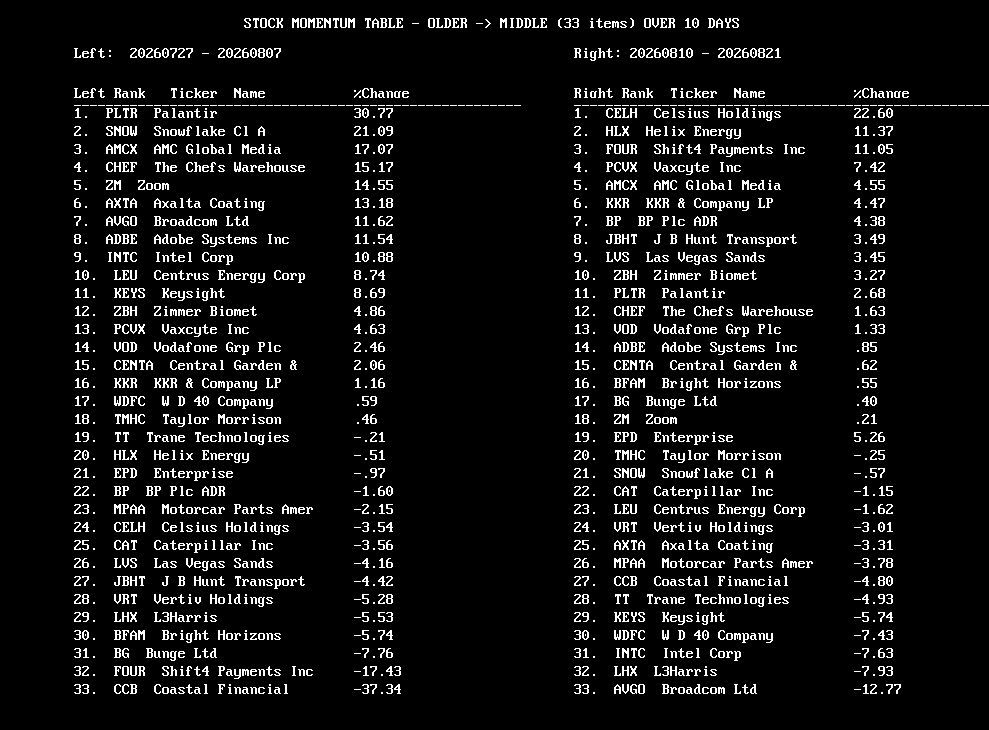
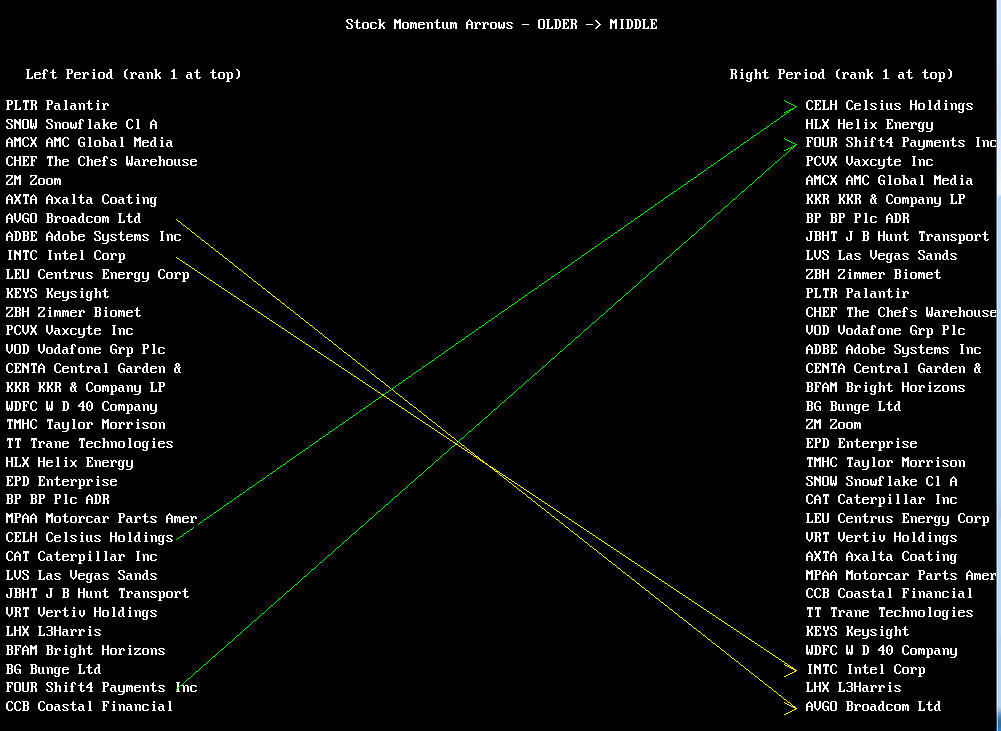
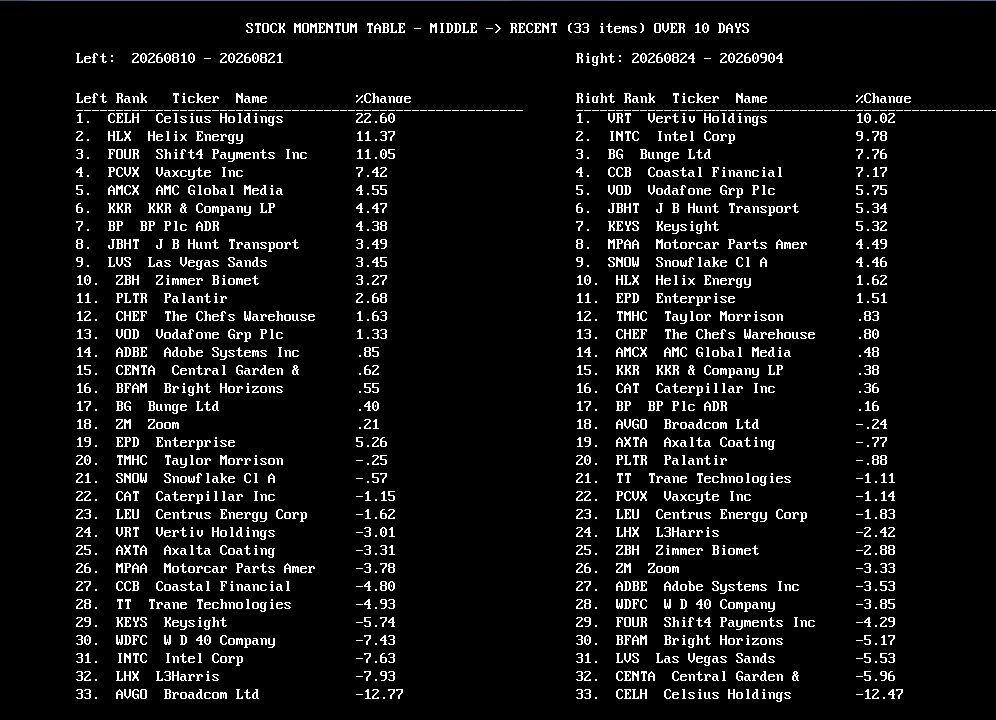
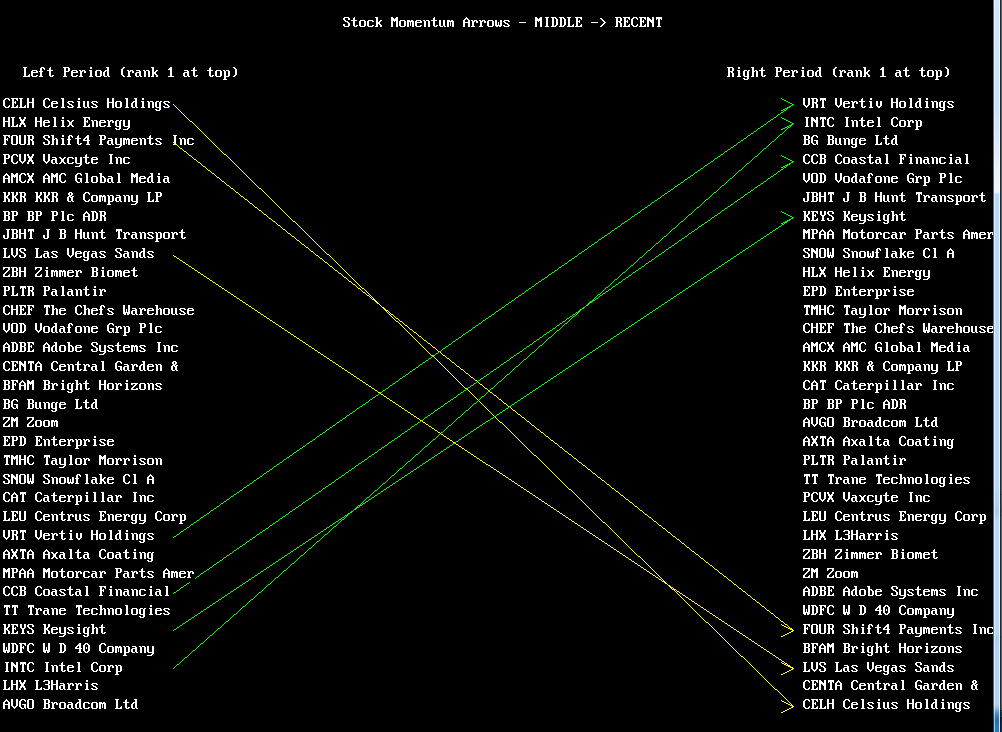

STOCKS RANKED BY 1-MONTH % CHANGE
Source file: stocks-screener-overall-market-09-26-2026.csv
Downloaded from Barchart.com as of 09-26-2026 04:31pm CDT
1876 stocks ranked (3 with N/A for 1-month change left out)
PAGE 1 - TOP 45 BY 1-MONTH % CHANGE (ranks 1-45)
-------------------------------------------------------------------------------------------------------------------
Rank Ticker Company Price 1-Mo % 5-Day % 3-Mo % 52-Wk % YTD %
-------------------------------------------------------------------------------------------------------------------
1 SECZ Securitize Corp 15.96 +137.15% +46.96% N/A N/A N/A
2 SRFM Surf Air Mobility Inc 1.11 +66.72% +58.96% +21.96% -72.93% -42.78%
3 EAF Graftech International Ltd 11.09 +65.52% +34.91% +51.50% -17.85% -28.50%
4 CHPT Chargepoint Holdings 8.93 +52.91% -13.47% +68.81% -17.47% +34.49%
5 SST System1 Inc 2.82 +49.21% -15.32% +23.68% -61.58% -28.06%
6 BALY Ballys Corporation 14 +47.52% +34.49% -3.18% +33.97% -15.25%
7 ACVA Acv Auctions Inc Cl A 10.46 +43.68% -0.19% +59.21% +4.91% +30.42%
8 GOTU Gaotu Techedu Inc ADR 2.46 +43.02% +13.89% +41.38% -25.00% +6.03%
9 DNA Ginkgo Bioworks Holdings 10.66 +41.38% +35.28% +11.39% -5.24% +28.28%
10 CVI Cvr Energy Inc 51.52 +35.97% -4.04% +88.65% +43.11% +102.52%
11 SEI Solaris Energy Infrastructure Inc 70.97 +34.18% +1.88% -10.65% +85.79% +54.38%
12 BE Bloom Energy Corp Cl A 288.7 +32.77% +8.69% -6.62% +320.29% +232.26%
13 FIRY Firy Inc 12.42 +32.41% +20.12% +48.56% +70.14% +188.17%
14 PS Pershing Square Inc 56.16 +31.68% +12.70% +89.60% N/A N/A
15 RSKD Riskified Ltd Cl A 7.78 +30.98% +25.28% +58.45% +65.18% +56.54%
16 GME Gamestop Corp 23.39 +29.30% +3.31% +11.33% -7.44% +16.48%
17 NET Cloudflare Inc Cl A 349.02 +25.74% +7.86% +53.99% +59.95% +77.03%
18 DELL Dell Technologies 562.89 +24.67% -0.91% +37.47% +329.82% +347.16%
19 JILL J. Jill Inc 24.63 +24.65% +2.88% +63.22% +39.47% +79.52%
20 ANF Abercrombie & Fitch Company 135.71 +24.62% -0.04% +51.89% +54.46% +7.82%
21 DOCN Digitalocean Holdings Inc 139.75 +24.14% +7.38% -3.85% +297.81% +190.42%
22 PRLB Proto Labs Inc 96.25 +24.03% +9.69% +18.51% +95.71% +90.25%
23 UMC United Microelectronics Corp ADR 24.31 +24.03% -1.22% -12.33% +226.31% +209.29%
24 TWLO Twilio 275.8 +23.14% +13.11% +44.49% +172.18% +93.90%
25 FTK Flotek Industries 29.53 +23.04% -5.96% +35.03% +106.22% +71.39%
26 P Everpure Inc 126 +22.56% +20.99% +75.76% +50.95% +88.03%
27 SSL Sasol Ltd ADR 14.03 +22.53% +2.26% +38.23% +124.48% +115.51%
28 ADCT Adc Therapeutics Sa 1.27 +22.12% +20.95% +22.12% -63.19% -64.02%
29 LVWR Livewire Group Inc 1.5 +21.95% -7.98% +48.51% -68.55% -66.06%
30 GCTS Gct Semiconductor Holding Inc 2.23 +21.20% +7.73% -9.72% +42.95% +85.83%
31 FPS Forgent Power Solutions Inc Cl A 38.97 +21.06% -1.19% -33.61% N/A N/A
32 RVTY Revvity Inc 151.11 +21.04% +5.34% +33.10% +81.97% +56.19%
33 SIG Signet Jewelers Ltd 102.26 +20.87% +1.87% +22.28% +7.38% +23.38%
34 TISI Team Inc 29.06 +20.63% +3.97% +71.95% +71.14% +105.66%
35 EBS Emergent Biosolutions 6.79 +20.39% -0.15% -14.91% -22.31% -45.06%
36 LUXE Luxexperience B.V. ADR 9.38 +20.26% -6.94% +26.93% +11.40% +12.34%
37 ECO Okeanis Eco Tankers Corp 77.9 +19.77% -8.30% +50.15% +164.43% +130.20%
38 EFXT Enerflex Ltd 23.57 +19.52% +3.65% -4.26% +111.96% +52.75%
39 ASX Ase Industrial Holding Ltd ADR 44.31 +19.50% +6.44% +5.88% +286.65% +175.22%
40 SG Sweetgreen Inc Cl A 8.24 +19.42% +14.13% -8.04% +0.86% +21.89%
41 CLS Celestica Inc 365.44 +19.09% +9.86% +1.12% +49.38% +23.62%
42 ZH Zhihu Inc ADR 3.76 +18.99% +17.13% +27.46% -28.11% +14.63%
43 RBLX Roblox Corp Cl A 46.44 +18.71% -2.89% +0.11% -64.83% -42.69%
44 RBRK Rubrik Inc Cl A 109.55 +18.24% +2.66% +54.25% +33.61% +43.24%
45 CRT Cross Timbers Royalty Trust 12.5 +17.81% -1.96% +40.61% +69.84% +57.23%
-------------------------------------------------------------------------------------------------------------------
PAGE 2 - SECTION CONTAINING WH - WH is rank 1131 of 1876
-------------------------------------------------------------------------------------------------------------------
Rank Ticker Company Price 1-Mo % 5-Day % 3-Mo % 52-Wk % YTD %
-------------------------------------------------------------------------------------------------------------------
1109 PNC PNC Bank 225.64 -7.57% -3.23% -8.01% +11.30% +8.10%
1110 GNL Global Net Lease Inc 8.55 -7.57% -2.51% -5.32% +5.82% -0.58%
1111 HLIO Helios Technologies Inc 68.64 -7.58% -0.94% -26.10% +30.74% +28.32%
1112 MFA MFA Financial Inc 8.17 -7.58% -2.27% -15.16% -14.81% -12.24%
1113 BGSF Bgsf Inc 5 -7.58% +1.01% -10.55% -26.25% +7.99%
1114 XYZ Block Inc 76.42 -7.62% +0.18% +3.16% +3.72% +17.41%
1115 DEO Diageo Plc ADR 87.52 -7.63% +2.25% +5.94% -6.54% +1.45%
1116 ESNT Essent Group Ltd 63.73 -7.64% -5.15% +3.04% -0.84% -1.97%
1117 U Unity Software Inc 41.55 -7.65% +0.36% +55.56% -1.33% -5.93%
1118 CHH Choice Hotels International 101.81 -7.66% +5.12% -8.43% -6.22% +6.88%
1119 CRI Carter's Inc 31.31 -7.67% +5.63% -27.34% +10.95% -3.45%
1120 XHR Xenia Hotels & Resorts Inc 18.17 -7.67% +2.54% -10.93% +27.60% +28.50%
1121 BLK Blackrock Inc 1086.3101 -7.68% +1.55% +11.77% -5.32% +1.49%
1122 SOBO South Bow Corp 33.99 -7.69% -5.27% -7.05% +19.10% +23.73%
1123 SPOT Spotify Technology S.A. 510.01 -7.70% +0.11% +15.59% -28.43% -12.17%
1124 BF.A Brown Forman Inc Cl A 26.69 -7.71% +0.64% -5.15% +0.64% +1.44%
1125 BVN Compania Mina Buenaventura S.A. A. 33.17 -7.71% -3.38% +8.12% +44.72% +19.19%
1126 CIA Citizens Inc 3.59 -7.71% +0.28% -39.66% -39.05% -25.67%
1127 VTR Ventas Inc 86.59 -7.72% -0.12% -0.96% +27.00% +11.90%
1128 OTIS Otis Worldwide Corp 65.94 -7.72% -3.77% -10.44% -26.27% -24.51%
1129 BXDC Blackstone Digital Infrastructure. 19.08 -7.74% -1.29% -11.50% N/A N/A
1130 NPK National Presto Industries 144.66 -7.74% -2.64% +16.93% +30.04% +35.50%
1131 WH Wyndham Hotels & Resorts Inc 69.99 -7.75% +2.84% -18.73% -13.55% -7.37%
1132 RDDT Reddit Cl A 149.84 -7.76% -0.67% -5.18% -35.62% -34.82%
1133 BKSY Blacksky Technology Inc 23.25 -7.77% +7.29% -4.52% +17.25% +24.00%
1134 FDS Factset Research Systems 273.08 -7.77% -3.79% +30.76% -3.80% -5.90%
1135 GTN.A Gray Television Inc Cl A 5.34 -7.77% +4.71% -31.54% -45.73% -55.50%
1136 LPX Louisiana-Pacific Corp 66.7 -7.77% +2.11% -18.26% -20.01% -17.41%
1137 AR Antero Resources Corp 35 -7.77% +0.40% +1.45% +2.79% +1.57%
1138 TECK Teck Resources Ltd 66.05 -7.78% +0.81% +11.95% +65.25% +37.92%
1139 OTF Blue Owl Technology Finance Corp 10.31 -7.78% -2.64% +0.59% -27.50% -29.09%
1140 NOA North American Construction Group. 12.3 -7.80% -3.15% -10.55% -10.61% -14.41%
1141 GPN Global Payments Inc 86.49 -7.81% +1.68% +26.89% +1.87% +11.74%
1142 SCI Service Corp International 77.84 -7.83% +0.10% +7.10% -3.70% -0.17%
1143 GBX Greenbrier Companies 42.54 -7.84% +1.72% -14.75% -6.26% -8.99%
1144 CIB Bancolombia S.A. ADR 95.15 -7.85% -1.53% +20.61% +81.45% +49.58%
1145 ASR Grupo Aeroportuario Del Sureste A. 243.21 -7.86% -0.05% -21.45% -27.69% -24.80%
1146 CMRE Costamare Inc 14.53 -7.86% -6.02% -1.16% +14.23% -7.98%
1147 IRM Iron Mountain Inc 111.38 -7.87% -2.59% -15.02% +10.50% +34.27%
1148 CP Canadian Pacific Kansas City Ltd 86.91 -7.88% -0.65% -0.15% +17.11% +18.04%
1149 SO Southern Company 82.88 -7.88% -3.09% -13.59% -11.54% -4.95%
1150 LION Lionsgate Studios Corp 10.85 -7.89% +1.02% -31.42% +55.67% +18.84%
1151 SNN Smith & Nephew Snats ADR 26.91 -7.91% -2.36% -10.95% -23.72% -17.98%
1152 INGR Ingredion Inc 96.72 -7.91% -0.63% -0.10% -20.07% -12.28%
1153 AVEX Aevex Corp Cl A 16.07 -7.91% -0.80% +4.15% N/A N/A
-------------------------------------------------------------------------------------------------------------------
PAGE 3 - BOTTOM 45 BY 1-MONTH % CHANGE (ranks 1832-1876)
-------------------------------------------------------------------------------------------------------------------
Rank Ticker Company Price 1-Mo % 5-Day % 3-Mo % 52-Wk % YTD %
-------------------------------------------------------------------------------------------------------------------
1832 XPOF Xponential Fitness Inc Cl A 3.92 -25.19% +7.40% -43.92% -49.87% -52.37%
1833 PATH Uipath Inc Cl A 12.46 -25.21% -6.95% +25.48% +2.64% -23.98%
1834 LFT Lument Finance Trust Inc 5.19 -25.37% -21.00% -51.04% -75.17% -63.19%
1835 CAVA Cava Group Inc 51.58 -25.56% -0.12% -38.08% -17.62% -12.11%
1836 AHT Ashford Hospitality Trust Inc 2.49 -25.56% -9.12% -22.43% -57.14% -41.55%
1837 FUN Six Flags Entertainment Corp 12.32 -25.74% +0.82% -45.17% -41.50% -19.69%
1838 BROS Dutch Bros Inc Cl A 37.89 -25.82% -5.35% -43.11% -28.99% -38.11%
1839 CHWY Chewy Inc 18.27 -26.00% -11.40% +0.72% -51.86% -44.72%
1840 EVH Evolent Health Inc Cl A Com 3.61 -26.18% -2.17% -28.23% -59.53% -9.75%
1841 DFH Dream Finders Homes Inc Cl A 11.3 -26.19% -0.44% -32.70% -56.30% -33.92%
1842 FOA Finance of America Companies Inc . 14.49 -26.33% +3.43% -33.10% -36.81% -40.15%
1843 ALIT Alight Inc Cl A 11.02 -26.34% -6.37% -2.36% -82.05% -71.74%
1844 BRBR Bellring Brands Inc Cl A 7.91 -26.49% -11.92% -30.55% -78.41% -70.41%
1845 TROX Tronox Inc 4.03 -26.86% -4.28% -41.08% +3.33% -3.36%
1846 ANRO Alto Neuroscience Inc 26.49 -27.04% -12.49% +4.70% +597.11% +48.82%
1847 SLQT Selectquote Inc 0.4 -27.05% -14.38% -55.06% -80.00% -71.63%
1848 CCM Concord Medical Services ADR 3.6 -27.27% -7.46% -18.37% -45.21% -6.74%
1849 PAR Par Technology Corp 14.06 -27.38% -7.80% -11.68% -64.76% -61.25%
1850 LDI Loandepot Inc Cl A 0.6701 -27.46% -3.96% -43.69% -79.06% -67.63%
1851 KRMN Karman Holdings Inc 35.69 -27.46% -0.17% -22.87% -47.05% -51.22%
1852 TPB Turning Point Brands 62.07 -27.66% -8.91% -26.02% -36.68% -42.74%
1853 ENOV Enovis Corp 18.46 -27.83% +2.33% -16.13% -38.51% -30.71%
1854 MAX Mediaalpha Inc Cl A 9.27 -27.86% -11.63% -15.73% -23.13% -28.42%
1855 ANVS Annovis Bio Inc 1.31 -28.02% +14.91% -20.61% -38.50% -62.14%
1856 ENVA Enova International Inc 173.48 -28.72% -0.71% -21.64% +41.24% +10.36%
1857 FINV Finvolution Group ADR 3.11 -28.83% -5.76% -33.97% -59.19% -40.54%
1858 ACR Acres Commercial Realty Corp 10.48 -29.48% -21.56% -38.43% -50.28% -50.89%
1859 OXM Oxford Industries 25.95 -29.48% -8.85% -26.30% -36.15% -24.12%
1860 EIX Edison International 52.65 -29.59% -4.81% -29.57% -2.59% -12.28%
1861 CXM Sprinklr Inc Cl A 5.07 -32.13% -4.88% +3.26% -35.08% -34.83%
1862 VACI Viking Acquisition Corp. I Cl A 6.93 -32.32% -11.27% -32.13% N/A -30.00%
1863 PCG Pacific Gas & Electric Company 12.34 -32.79% -6.52% -27.75% -14.54% -23.21%
1864 GLAS Glass House Brands Inc 6.8 -32.87% -14.68% -46.62% +4.45% -23.16%
1865 RC Ready Capital Corp 1.33 -33.17% -19.88% -23.12% -67.95% -38.99%
1866 BBW Build-A-Bear Workshop 25.77 -34.54% +5.44% -19.47% -64.41% -57.94%
1867 JKS Jinkosolar Holding Company ADR 9.67 -37.61% -6.93% -43.12% -61.91% -62.53%
1868 CTEV Claritev Corporation 23.2 -38.36% -24.70% -33.18% -53.46% -45.73%
1869 EVMN Evommune Inc 8.49 -38.43% -12.02% -64.82% N/A -50.41%
1870 ACH Accendra Health Inc 0.708 -38.97% -20.42% -77.67% -85.37% -74.71%
1871 DAVA Endava Plc ADR 1.81 -44.31% -34.89% -30.65% -79.43% -71.36%
1872 CABO Cable One Inc 14.65 -44.38% -15.66% -63.96% -90.94% -87.02%
1873 GWH Ess Tech Inc 0.21 -44.44% -41.78% -72.51% -87.86% -88.83%
1874 GETY Getty Images Holdings Inc Cl A 0.1404 -47.26% -37.10% -85.81% -92.84% -89.52%
1875 MSC Studio City Intl Holdings Ltd ADR 0.88 -52.46% -11.11% -55.22% -76.22% -75.21%
1876 SOS Sos Ltd ADR 0.3589 -62.70% -48.45% -65.82% -82.32% -74.18%
-------------------------------------------------------------------------------------------------------------------
Overall Recommendation
Decision Weighting Factors Factors Weighted Points Moving Average - 1 A.I. Description + 1 News - 1 Amibroker - 1 Pattern Match - 1 Heiken Ashi - 1 Market Profile - 1 Zenith Index - 1 Mgmt Discussion + 1 Analysts + 1 Co. Website Description + 1 Overall Mkt. Comparisoon - 1 Total - 4
Stocks Recent Momentum Changes |
Below is an interim report on a portion of Zenith's First Quarter covering 01-02-2026 to 02-19-2026. We commit around $30,000 per stock and do not compound investments so share alotments stay constant. Reports are made at odd intervals and trades closed out at the end of each quarter starting with March 31st, then given a fresh start each quarter with new cumulative totals and previous totals out.
Closed Trades
_____________
                                                        Trade   Total     Gain
Date    Sym   Company                        BS Shares  Price   Aft Cm  (-Loss)

260102  ADBE  Adobe Systems Inc              S    113 347.61 $  39,279 $      0
260209  ADBE  Adobe Systems Inc              B    226 265.58 $  60,021 $  9,269
260901  ADBE  Adobe Systems Inc              S    226 291.58 $  65,897 $ 11,250
260102  AMCX  AMC Networks Cl A              S   3906   9.48 $  37,028 $      0
260209  AMCX  AMC Networks Cl A              B   7812   7.32 $  57,183 $  8,437
260825  AMCX  AMC Global Media Inc           S   7812  12.80 $  99,993 $ 24,490
260102  AVGO  Broadcom Ltd                   S     88 357.05 $  31,420 $      0
260204  AVGO  Broadcom Ltd                   B    176 298.25 $  52,492 $  5,174
260603  AVGO  Broadcom Ltd                   S    176 490.05 $  86,248 $ 17,353
260203  AXTA  Axalta Coating Systems Ltd     B    871  31.76 $  27,662 $      0
260210  AXTA  Axalta Coating Systems Ltd     S   1742  34.77 $  60,569 $  2,622
260106  BFAM  Bright Horizons Family Solutio S    352 103.41 $  36,400 $      0
260209  BFAM  Bright Horizons Family Solutio B    704  83.81 $  59,002 $  6,899
260102  BG    Bunge Ltd                      B    253  89.59 $  22,666 $      0
260204  BG    Bunge Ltd                      S    506 120.42 $  60,932 $  7,800
260730  BG    Bunge Ltd                      B    506 103.84 $  52,543 $  7,509
260108  BP    BP Plc ADR                     B    811  33.73 $  27,355 $      0
260204  BP    BP Plc ADR                     S   1622  39.11 $  63,436 $  4,363
260701  BP    BP Plc ADR                     B   1622  36.40 $  59,040 $  9,237
260102  CAT   Caterpillar Inc                B     40 581.06 $  23,242 $      0
260210  CAT   Caterpillar Inc                S     80 744.48 $  59,558 $  6,537
260108  CCB   Coastal Financial Corp         S    341 118.57 $  40,432 $      0
260205  CCB   Coastal Financial Corp         B    682  84.39 $  57,553 $ 11,656
260102  CELH  Celsius Holdings Inc           B    647  46.23 $  29,910 $      0
260120  CELH  Celsius Holdings Inc           S   1294  57.27 $  74,107 $  7,143
260806  CELH  Celsius Holdings Inc           B   1294  23.79 $  30,784 $ 22,599
260116  CENTA Central Garden & Pet           B    889  28.71 $  25,523 $      0
260206  CENTA Central Garden & Pet           S   1778  34.16 $  60,736 $  4,845
260114  CHEF  The Chefs Warehouse            B    458  57.96 $  26,545 $      0
260209  CHEF  The Chefs Warehouse            S    916  67.45 $  61,784 $  4,347
260105  EPD   Enterprise Products Partners L B    852  31.87 $  27,153 $      0
260205  EPD   Enterprise Products Partners L S   1704  35.19 $  59,963 $  2,828
260114  FOUR  Shift4 Payments Inc            S    501  67.88 $  34,007 $      0
260203  FOUR  Shift4 Payments Inc            B   1002  53.18 $  53,286 $  7,364
260102  HLX   Helix Energy Solutions Group   B   3546   6.21 $  22,020 $      0
260209  HLX   Helix Energy Solutions Group   S   7092   8.69 $  61,629 $  8,794
260224  HLX   Helix Energy Solutions Group   S   7092  10.64 $  75,458 $  8,901
260624  HLX   Helix Energy Solutions Group   B   7092   8.50 $  60,282 $  7,588
260102  INTC  Intel Corp                     B    636  38.14 $  24,257 $      0
260122  INTC  Intel Corp                     S   1272  54.05 $  68,751 $ 10,118
260102  JBHT  J B Hunt Transport             B    130 195.48 $  25,412 $      0
260210  JBHT  J B Hunt Transport             S    260 228.60 $  59,436 $  4,306
260102  KEYS  Keysight Technologies Inc      B    127 205.76 $  26,131 $      0
260210  KEYS  Keysight Technologies Inc      S    254 235.59 $  59,839 $  3,788
260107  KKR   KKR & Company LP               S    279 135.91 $  37,918 $      0
260205  KKR   KKR & Company LP               B    558  98.34 $  54,873 $ 10,482
260813  KKR   KKR & Company LP               S    558 115.40 $  64,393 $  8,900
260918  KKR   KKR & Company LP               B    279   0.00 $       0 $ 32,519
260121  LEU   Centrus Energy Corp            S    113 342.14 $  38,661 $      0
260204  LEU   Centrus Energy Corp            B    226 232.82 $  52,617 $ 12,353
260102  LHX   L3Harris Technologies Inc      B     86 293.92 $  25,277 $      0
260129  LHX   L3Harris Technologies Inc      S    172 365.89 $  62,933 $  6,189
260826  LHX   L3Harris Technologies          B    172 261.12 $  44,912 $  9,831
260102  LVS   Las Vegas Sands                S    526  64.96 $  34,168 $      0
260129  LVS   Las Vegas Sands                B   1052  52.44 $  55,166 $  6,585
260115  MPAA  Motorcar Parts Amer            S   2795  13.60 $  38,012 $      0
260209  MPAA  Motorcar Parts Amer            B   5590   9.38 $  52,434 $ 11,795
260630  MPAA  Motorcar Parts Amer            S   5590  16.27 $  90,949 $ 17,776
260105  PCVX  Vaxcyte Inc                    B    545  44.38 $  24,187 $      0
260203  PCVX  Vaxcyte Inc                    S   1090  58.36 $  63,612 $  7,619
260611  PCVX  Vaxcyte Inc                    B   1090  45.75 $  49,867 $ 10,137
260107  PLTR  Palantir Technologies Inc Cl A S    215 185.41 $  39,863 $      0
260205  PLTR  Palantir Technologies Inc Cl A B    430 129.60 $  55,728 $ 11,999
260828  PLTR  Palantir Technologies Cl A     S    430 186.49 $  80,190 $ 16,998
260108  SNOW  Snowflake Inc Cl A             S    164 233.95 $  38,367 $      0
260205  SNOW  Snowflake Inc Cl A             B    328 157.64 $  51,705 $ 12,515
260903  SNOW  Snowflake Cl A                 S    328 380.71 $ 124,872 $ 42,842
260106  TMHC  Taylor Morrison Home Corp      B    451  57.82 $  26,076 $      0
260210  TMHC  Taylor Morrison Home Corp      S    902  66.62 $  60,091 $  3,969
260106  TT    Trane Technologies Plc         B     65 351.54 $  22,850 $      0
260210  TT    Trane Technologies Plc         S    130 460.80 $  59,903 $  7,101
260515  TTEK  Tetra Tech Inc                 B    816  26.07 $  21,273 $      0
260824  TTEK  Tetra Tech Inc                 S   1632  37.21 $  60,726 $  9,090
260113  VOD   Vodafone Grp Plc ADR           B   1967  13.28 $  26,121 $      0
260204  VOD   Vodafone Grp Plc ADR           S   3934  15.74 $  61,921 $  4,839
260108  VRT   Vertiv Holdings Llc.           B    150 160.36 $  24,054 $      0
260209  VRT   Vertiv Holdings Llc.           S    300 206.35 $  61,905 $  6,898
260729  VRT   Vertiv Holdings                B    300 223.13 $  66,939 $ 22,952
260109  WDFC  W D 40 Company                 B    125 177.13 $  22,141 $      0
260205  WDFC  W D 40 Company                 S    250 250.71 $  62,677 $  9,197
260915  WDFC  W D 40 Company                 B    250 191.90 $  47,974 $ 13,001
260129  ZBH   Zimmer Biomet Holdings         B    328  85.44 $  28,024 $      0
260210  ZBH   Zimmer Biomet Holdings         S    656  94.48 $  61,978 $  2,965
260120  ZM    Zoom Communications Inc        B    315  80.57 $  25,379 $      0
260128  ZM    Zoom Communications Inc        S    630  96.60 $  60,857 $  5,049
                                                                      _________
                                                                     $  465,307
Open Positions, Only
_____________________

                                                        Recent  Total     Gain
Date    Sym   Company                        BS Shares  Price   Aft Cm  (-Loss)

260825  AMCX  AMC Global Media Inc           S   3906  12.23 $  47,770 $  2,249
260901  ADBE  Adobe Systems Inc              S    113 263.32 $  29,755 $  3,225
260807  AXTA  Axalta Coating Systems Ltd     S    871  33.15 $  28,873 $  4,460
260331  BP    BP Plc ADR                     S    811  46.92 $  38,048 $  8,442
260422  BFAM  Bright Horizons Family Solutio S    352  67.00 $  23,582 $  3,061
260603  AVGO  Broadcom Ltd                   S     88 338.26 $  29,766 $ 13,491
260603  BG    Bunge Ltd                      S    253 122.26 $  30,931 $  4,614
260630  CAT   Caterpillar Inc                S     40 782.45 $  31,298 $ 11,323
260226  CELH  Celsius Holdings Inc           S    647  27.80 $  17,986 $  2,569
260806  CENTA Central Garden & Pet           S    889  34.60 $  30,757 $  5,201
260507  LEU   Centrus Energy Corp            S    113 141.46 $  15,984 $    -32
260428  CCB   Coastal Financial Corp         S    341  47.25 $  16,112 $  3,467
260519  EPD   Enterprise Products Partners L S    852  38.76 $  33,023 $    861
260224  HLX   Helix Energy Solutions Group   S   3546  10.60 $  37,587 $    143
260630  INTC  Intel Corp                     S    636  97.86 $  62,240 $ 27,665
260716  JBHT  J B Hunt Transport             S    130 272.94 $  35,482 $  3,128
260622  KEYS  Keysight Technologies          S    127 311.94 $  39,616 $  7,603
260302  LHX   L3Harris Technologies          S     86 251.83 $  21,657 $    393
260417  LVS   Las Vegas Sands                S    526  42.03 $  22,107 $   -198
260630  MPAA  Motorcar Parts Amer            S   2795  10.91 $  30,493 $ 15,131
260828  PLTR  Palantir Technologies Cl A     S    215 176.09 $  37,859 $  2,258
260220  FOUR  Shift4 Payments Inc            S    501  43.56 $  21,821 $  4,288
260903  SNOW  Snowflake Cl A                 S    164 322.80 $  52,940 $  9,591
260721  TMHC  Taylor Morrison Home Corp      S    451  72.45 $  32,674 $   -314
260824  TTEK  Tetra Tech Inc                 S    816  36.76 $  29,996 $    371
260901  CHEF  The Chefs Warehouse            S    458 106.00 $  48,548 $  4,843
260625  TT    Trane Technologies Plc         S     65 415.67 $  27,018 $  5,589
260225  PCVX  Vaxcyte Inc                    S    545  59.03 $  32,171 $  7,165
260514  VRT   Vertiv Holdings                S    150 236.24 $  35,436 $  1,947
260915  VOD   Vodafone Grp Plc ADR           S   1967  17.65 $  34,717 $   -298
260710  WDFC  W D 40 Company                 S    125 192.44 $  24,055 $     67
260901  ZBH   Zimmer Biomet Holdings         S    328  98.26 $  32,229 $  1,183
260601  ZM    Zoom Communications Inc        S    315  93.72 $  29,521 $  6,322
                                                                      _________
                                                                     $  159,808

                             Grand Total (non-option trades):       $   625,115
Summary (sorted by AVPE/CUPE, desc):
Ticker  Name                                      AVPE/CUPE
BP      BP                                           16.359
ZM      Zoom Communications                           7.623
AMCX    AMC Global Media                              5.217
BFAM    Bright Horizons Family Solutions              3.325
CELH    Celsius Holdings                              3.166
ADBE    Adobe                                         2.934
ZBH     Zimmer Biomet Holdings                        2.196
VOD     Vodafone Group                                1.894
TTEK    Tetra Tech                                    1.519
WDFC    WD-40                                         1.439
PLTR    Palantir Technologies                         1.380
LVS     Las Vegas Sands                               1.377
MPAA    Motorcar Parts Of America                     1.285
CENTA   Central Garden & Pet                          1.267
AXTA    Axalta Coating Systems                        1.223
AVGO    Broadcom                                      1.216
LHX     L3Harris Technologies Inc                     1.159
FOUR    Shift4 Payments                               1.057
VRT     Vertiv Holdings                               0.917
CCB     Coastal Financial                             0.799
TT      Trane Technologies                            0.790
JBHT    J.B Hunt Transport Services                   0.765
KEYS    Keysight Technologies                         0.719
CHEF    Chefs' Warehouse                              0.709
EPD     Enterprise Products Partners                  0.644
CAT     Caterpillar                                   0.474
BG      Bunge Global SA                               0.384
LEU     Centrus Energy                                0.275
INTC    Intel                                         0.009
SNOW    Snowflake                                     0.000
PCVX    Vaxcyte                                       0.000
This is useful in relating recent performance to past valuation.
09-18-2026: Tetra Tek Inc. (TTEK): Worldwide Infrastructure Consulting Engineering
09-07-2026: Celsius Holding Co. (CELH): Controversial Leadership Shuffle
04-15-2026: Keysight Technologies (KEYS): Artificial Intelligence Periphery
02-24-2026: Bright Horizons Family Soluntions, Inc. (BFAM): Childrens' Future in Weak Economy
02-05-2026: Bunge Ltd. (BG): Stronger Through Recent Acquisition
12-08-2025: Chefs Warehouse (CHEF): Wholesale or Retail?
11-07-2025: J.B. Hunt Transport Services (JBHT): Billion Dollar Buyback
11-05-2025: Helix Energy Solutions Group (HLX): New Gulf of America Contract
11-04-2025: AMC Networks Inc. (AMCX): Declining Streaming Customer Base
10-31-2025: Zoom Communications, Inc. (ZM): Free Meeting Rooms Lead to Upscale Add-Ons
10-20-2025: Snowflake Inc. Cl A (SNOW): Understanding What They Do Is Difficult
09-12-2025: Taylor Morrison Home Corp. (TMHC): Real Estate Housing Price Cycle Peaking?
08-27-2025: Axalta Coating Systems Ltd. (AXTA: Protective Coatings are a Big Business
08-07-2025: Vodafone Group PLC ADR (VOD): Connecting the World
08-01-2025: MotorCar Parts of America (MPAA): Small Cap Heading Toward Big Cap
07-28-2025: Plantir Technologies Inc. CL A (PLTR) Another "Dot".Com Era" Lookalike?
05-25-2025: Why Most Seniors Have a Short Lifespan After 80 and 5 Secrets to Living Beyond
04-30-2025: Plan to Insulate Manipulated U.S. Markets
04-27-2025: How Fools Become World's Most Powerful Leaders
10-25-2024: W D 40 Company: Swing Tradeable?
10-19-2024: Centrus Energy, Inc. (LEU): World's Only Publicly Held Nuclear Fuels Processor
10-11-2024: Pennant Investment Corp.: 7 % Per Annum Paid Out Monthly
Trading in stocks involves risk, and past performance is no guarantee of future profits. Zenith does not sell advice nor does it manage discretionary accounts other
than its own. Readers should be aware of the vested interest that all traders / brokers have in encouraging other traders
to make the same transactions.
No one should follow investment advice blindly. This web site should be used only as a "sounding board" for confirming one's own opinion. Any suggested order placements should
be reviewed and reset to fit current market conditions by individual traders.